

Sustainability
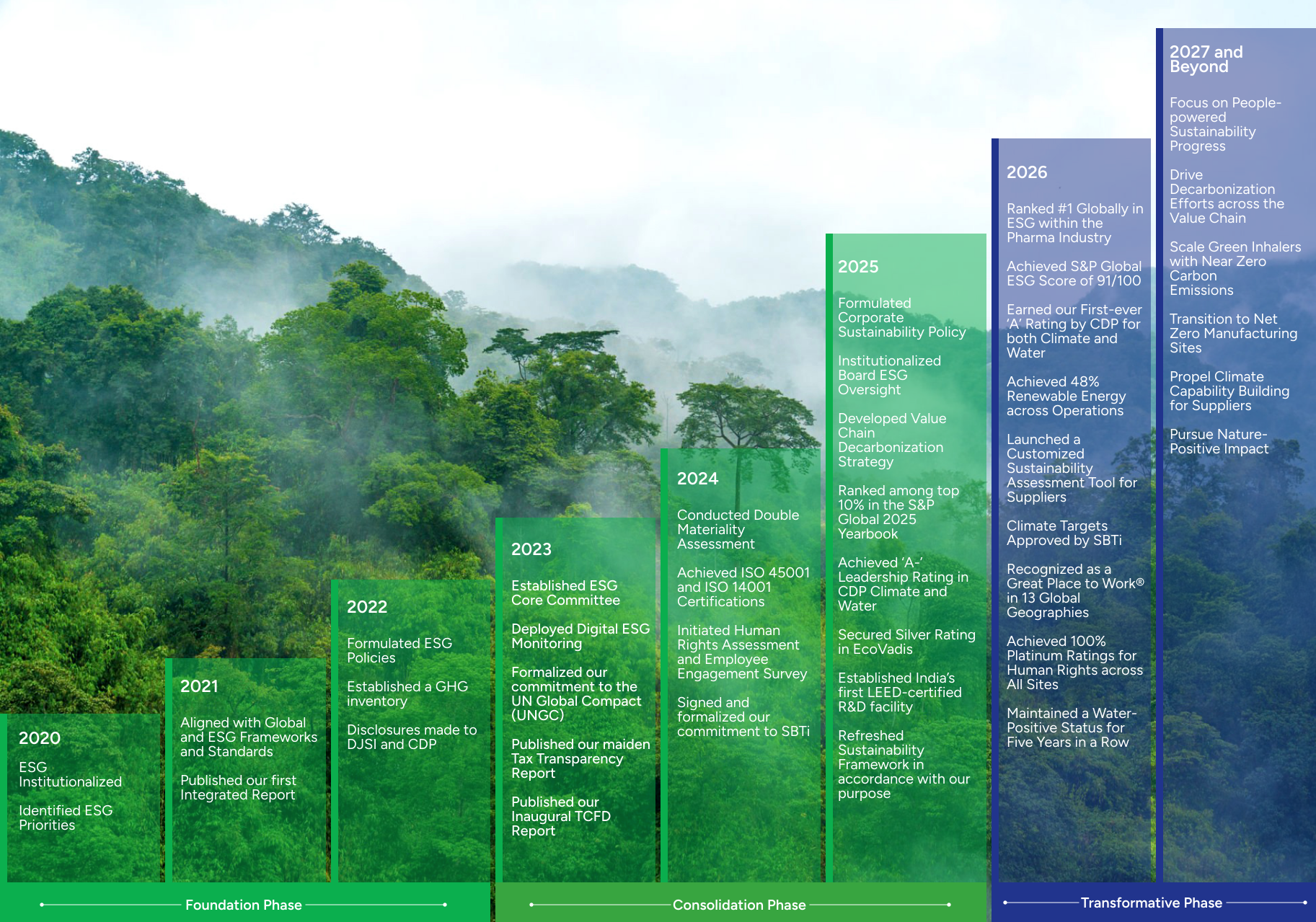
Sustainability Journey

Double Materiality Assessment
At Lupin, we are guided by our purpose, stakeholder expectations, and a dynamic regulatory environment to evaluate and prioritize ESG imperatives most material to our business.
The Company conducts an annual Double Materiality Assessment (DMA) to evaluate ESG across two complementary dimensions: (i) Financial Materiality – topics influencing Lupin’s financial performance and long-term value creation; and (ii) Impact Materiality – topics reflecting Lupin’s actual or potential impact on stakeholders and the environment across the value chain.
Guided by leading global frameworks such as the EU Corporate Sustainability Reporting Directive (CSRD), the European Sustainability Reporting Standards (ESRS), and the Global Reporting Initiative (GRI) Standards 2021, the Double Materiality Assessment strengthens the robustness, comparability, and credibility of our ESG disclosures.
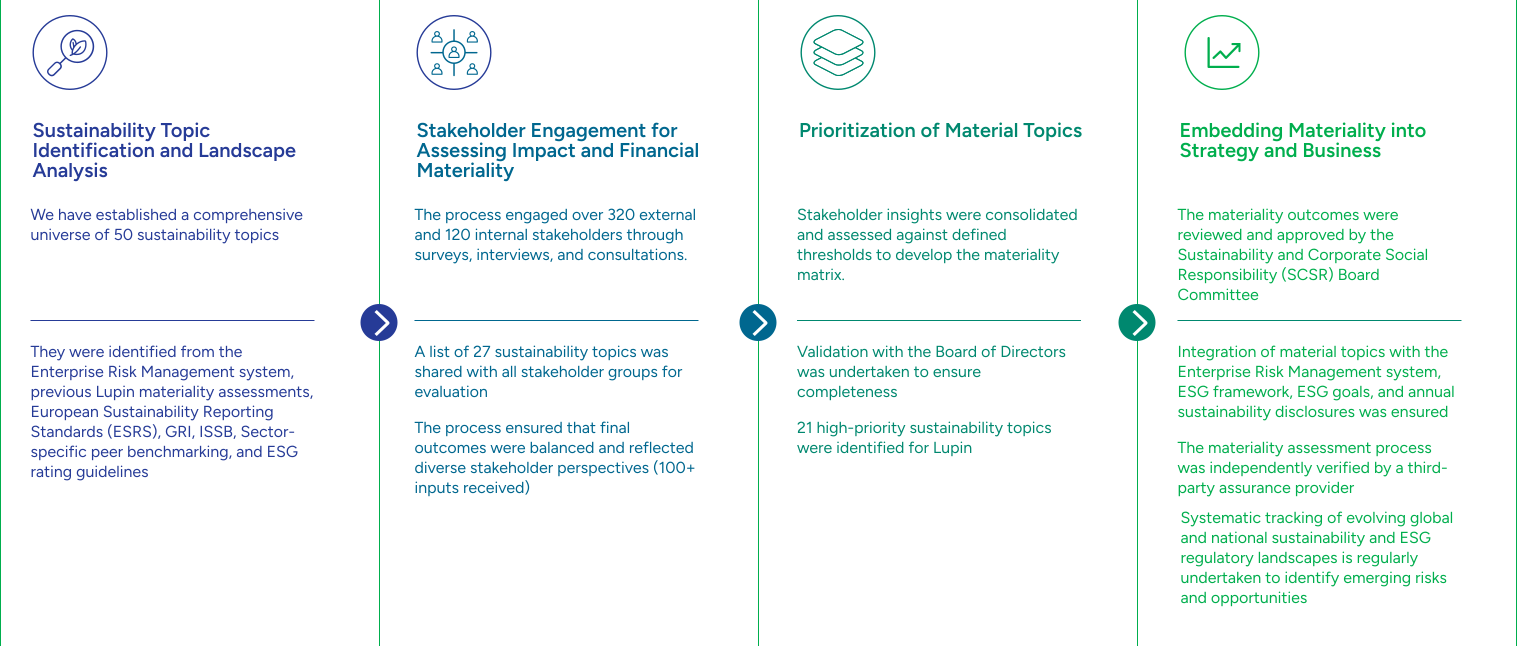
As part of the assessment, we brought in perspectives from ~100 internal and external stakeholders, including senior management, business heads, key personnel, sustainability experts, civil society organizations, B2B customers, suppliers, contract manufacturers, healthcare professionals, media representatives, and institutional investors.
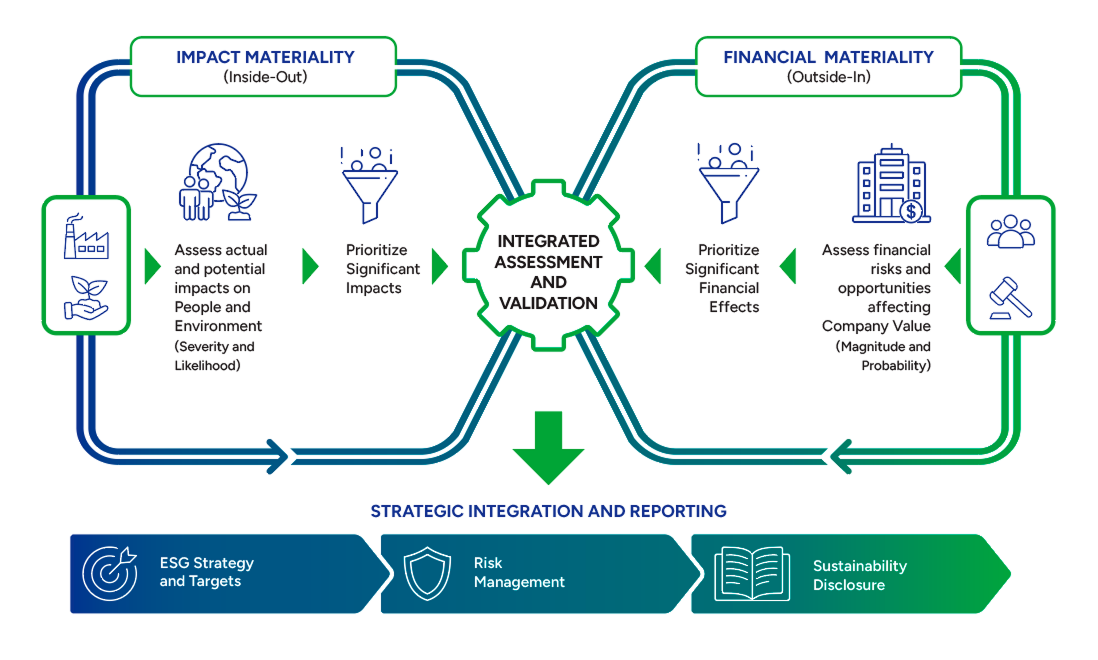
Lupin's Step-by-Step Approach for Assessing Double Materiality

The following identified material topics guide our Enterprise Risk Management Framework, enabling proactive risk mitigation, opportunity identification, and efficient capital allocation.
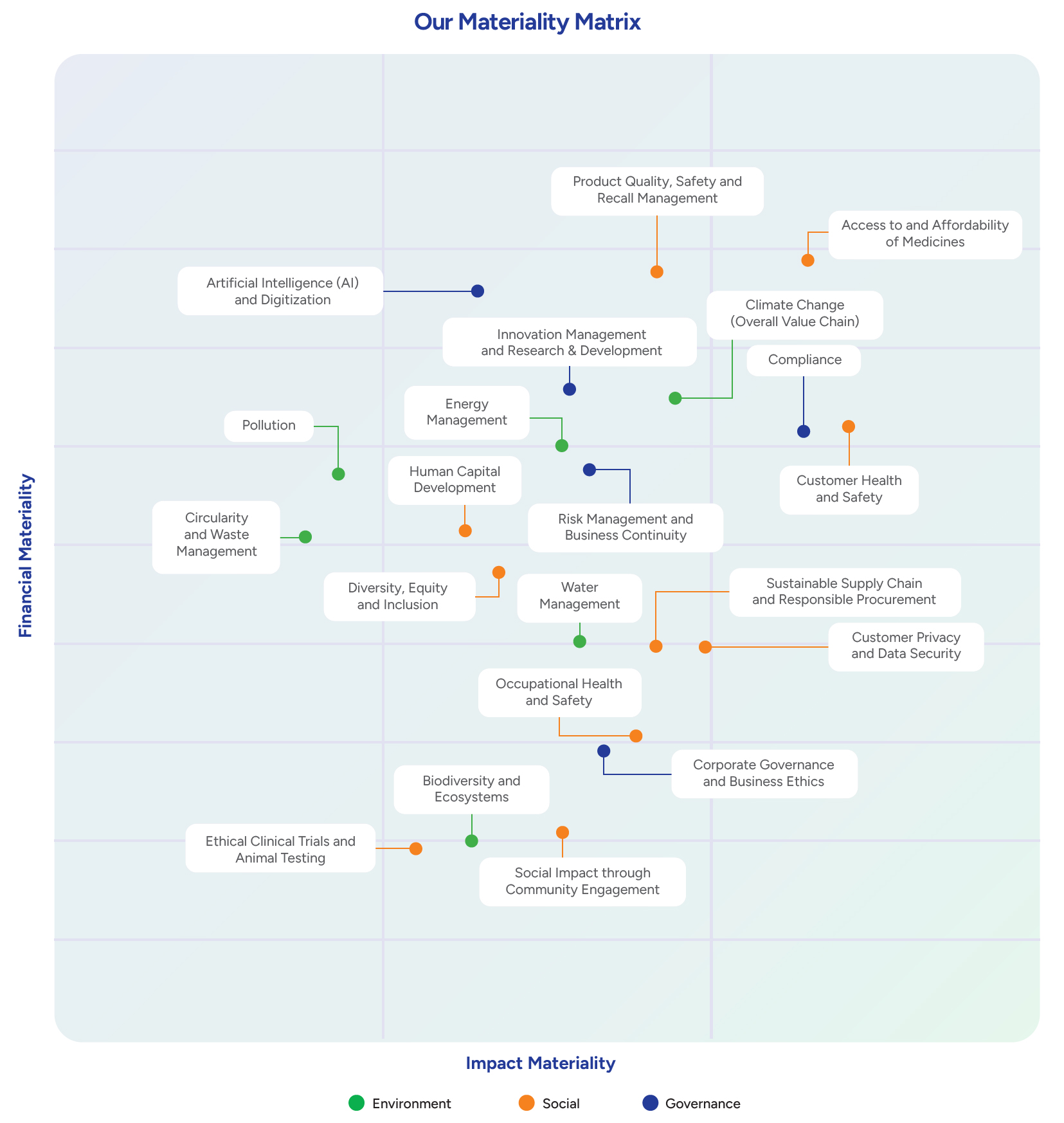
Changes to the List of Material Topics
- In FY26, while our sustainability ambition remained consistent, we redefined and streamlined our material considerations to improve clarity and enable stronger decision-making in line with our long-term strategy.
- Access to and affordability of medicines continue to be material and are now more clearly embedded within Lupin’s purpose and patient-centric strategy, reaffirming their critical relevance to the business.
- The FY26 materiality matrix reflects an expanded scope and sharper prioritization, with several areas not explicitly identified in FY25, including Innovation Management, AI, Social Impact, and Ethical Clinical Trials and Animal Testing.
- While most material areas from the FY25 assessment remain unchanged, select areas have been refined in FY26 to enhance clarity and strengthen coherence, as outlined below.
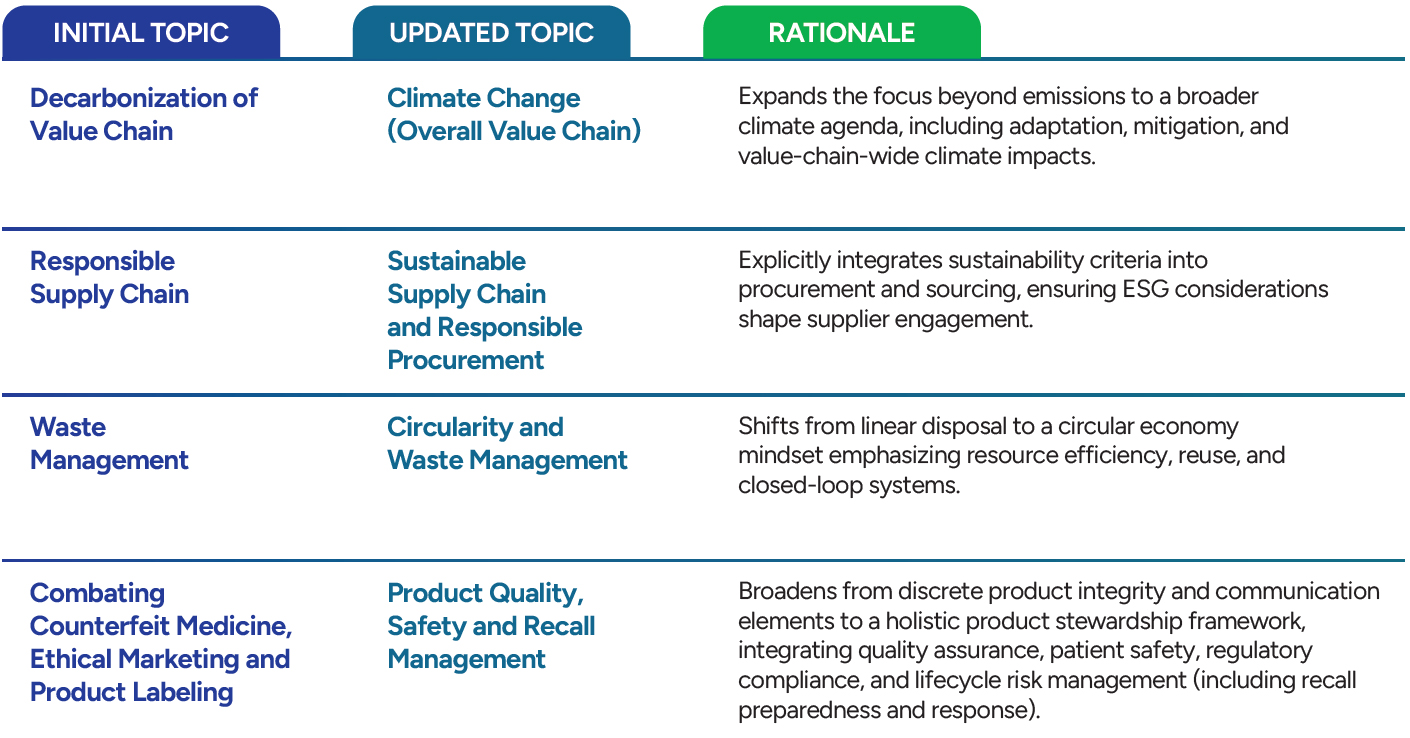
- Certain themes not represented as distinct categories in the FY26 matrix have been integrated into larger themes. For instance, Sustainable Process Design and Antimicrobial Resistance (AMR) are reflected across energy, climate, circularity, pollution, and operational themes, while Human Rights is embedded within Human Capital Development.

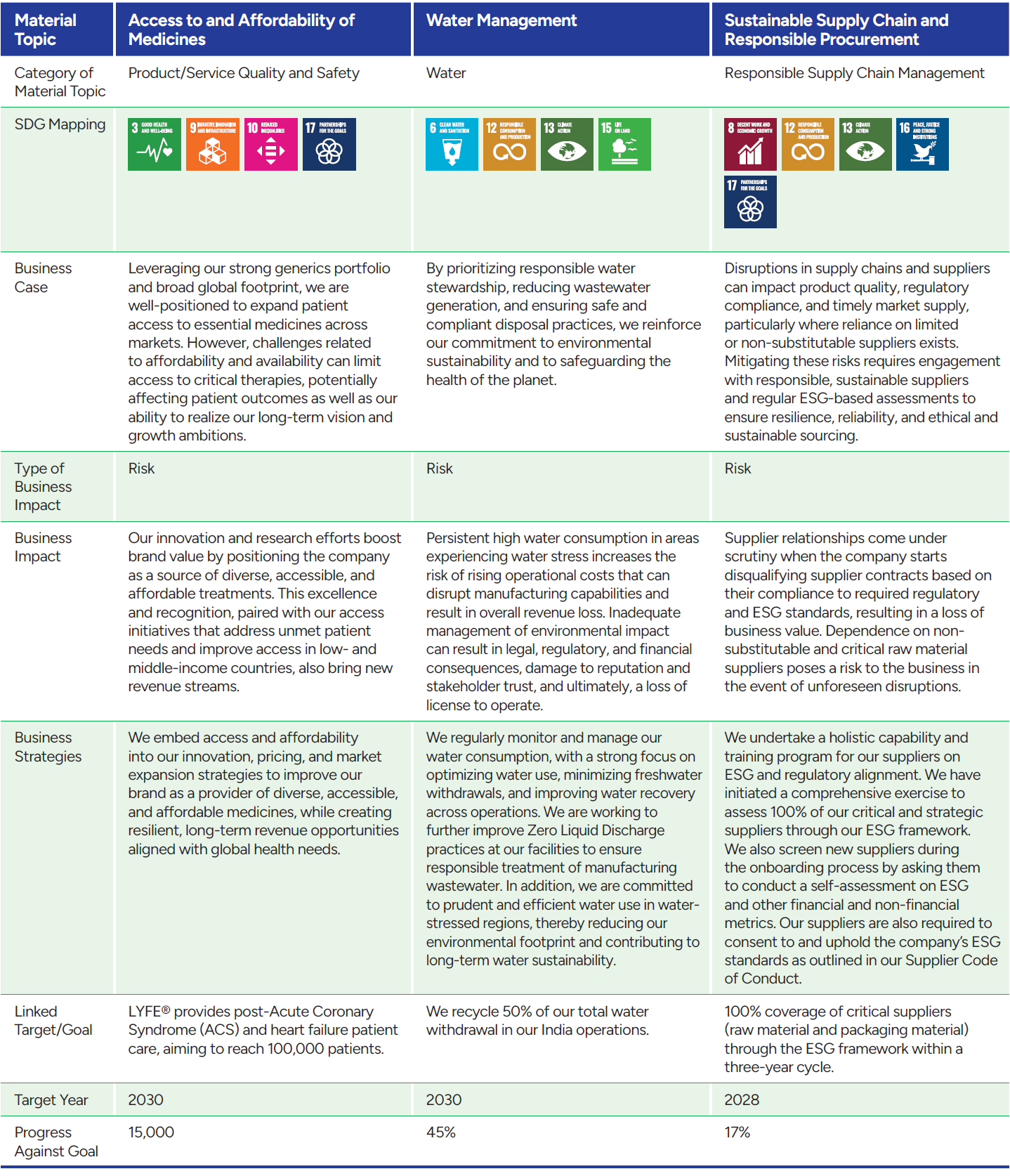
Material Issues for Enterprise Value Creation
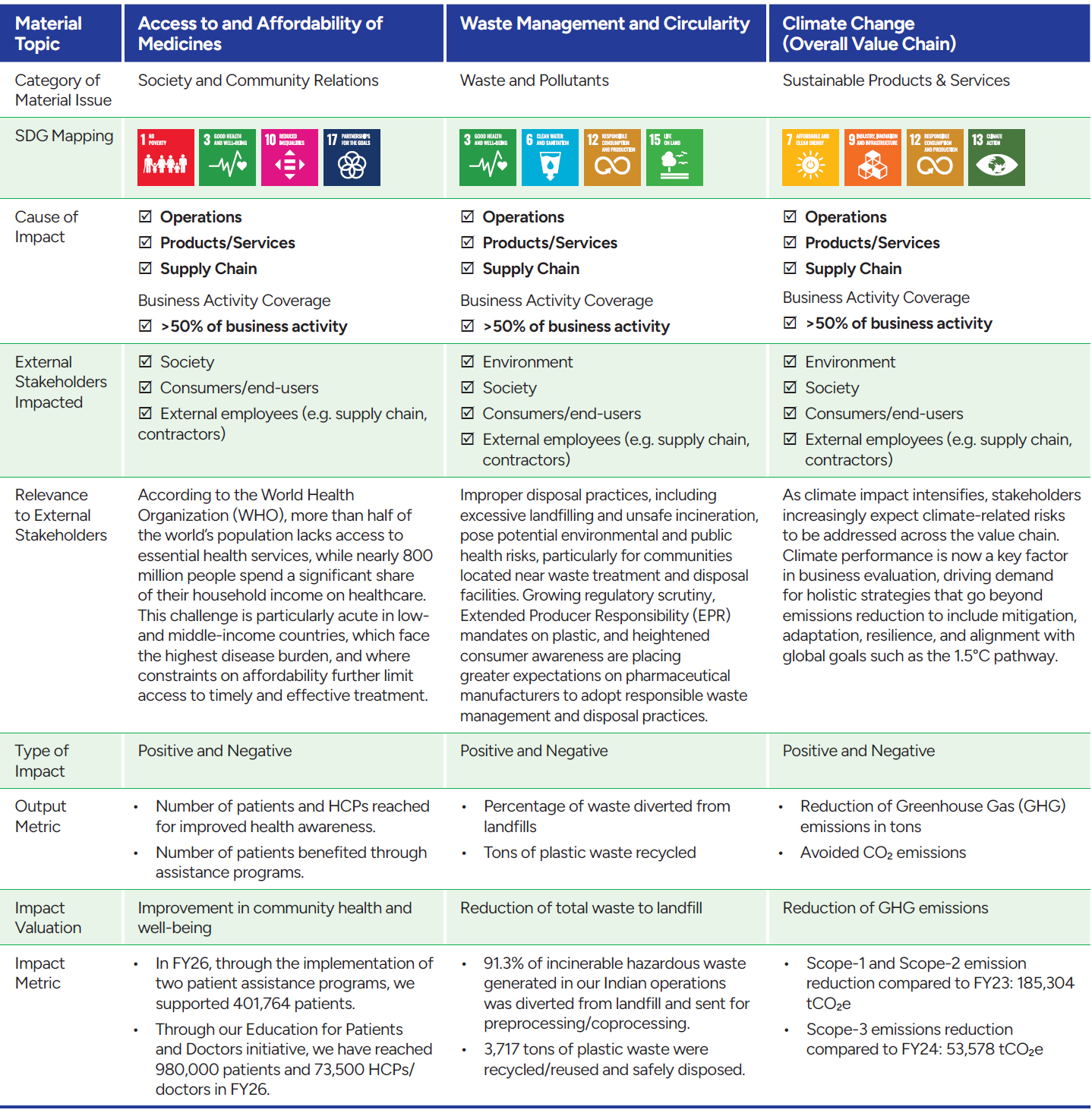
Material Issues for External Stakeholders
Executive Compensation Linkage
To bolster accountability for ESG performance and advance its purpose, Lupin embeds material ESG goals and Key Performance Indicators (KPIs) within the variable compensation framework for senior leadership and relevant employees. These objectives are incorporated into performance assessments for the Chief Executive Officer, Managing Director, Global Chief Financial Officer, Presidents, Business Unit Heads, and relevant employees, with outcomes directly influencing annual bonuses and variable pay – thereby embedding ESG priorities into the company’s purpose and corporate strategy.
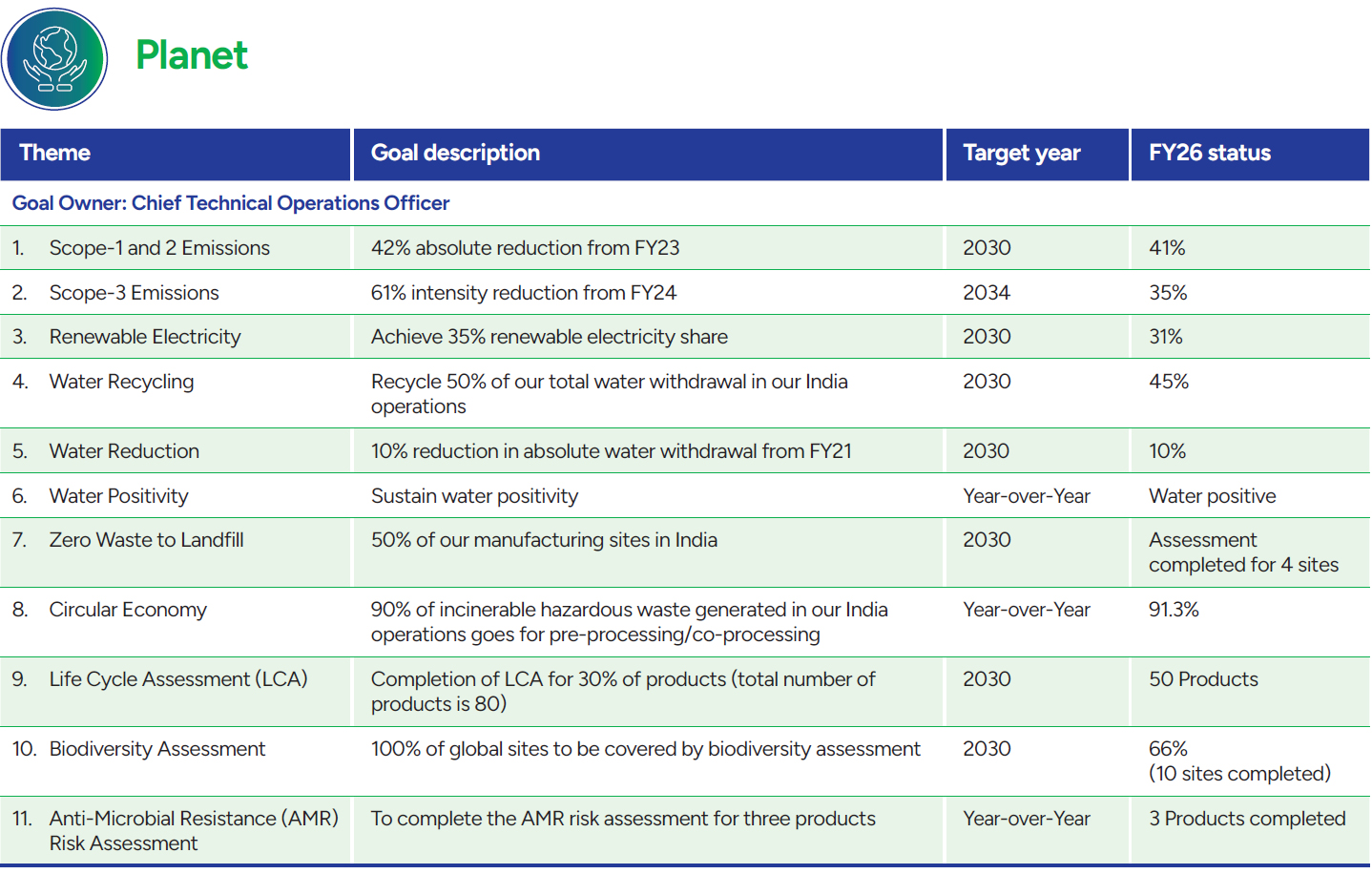
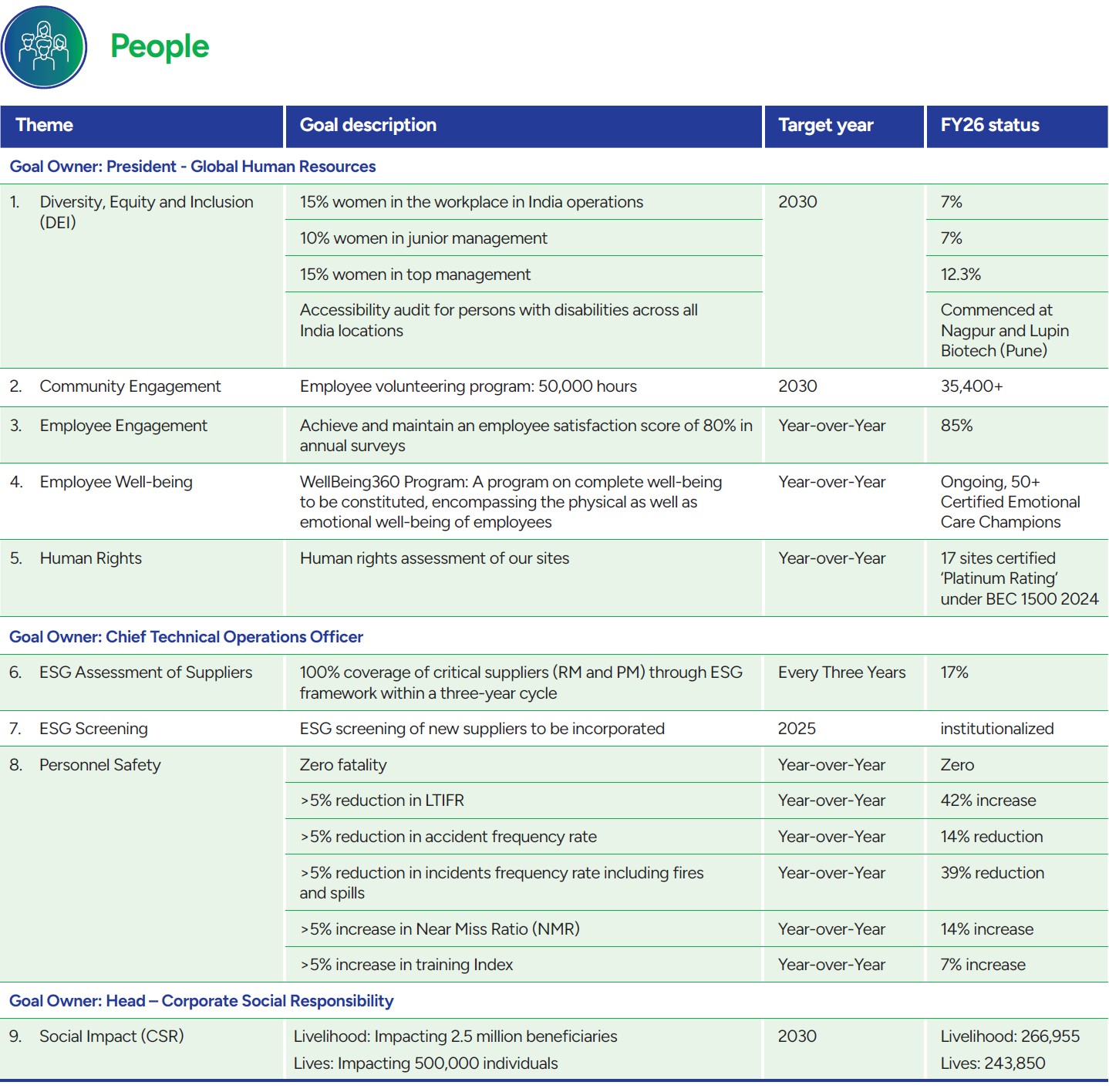
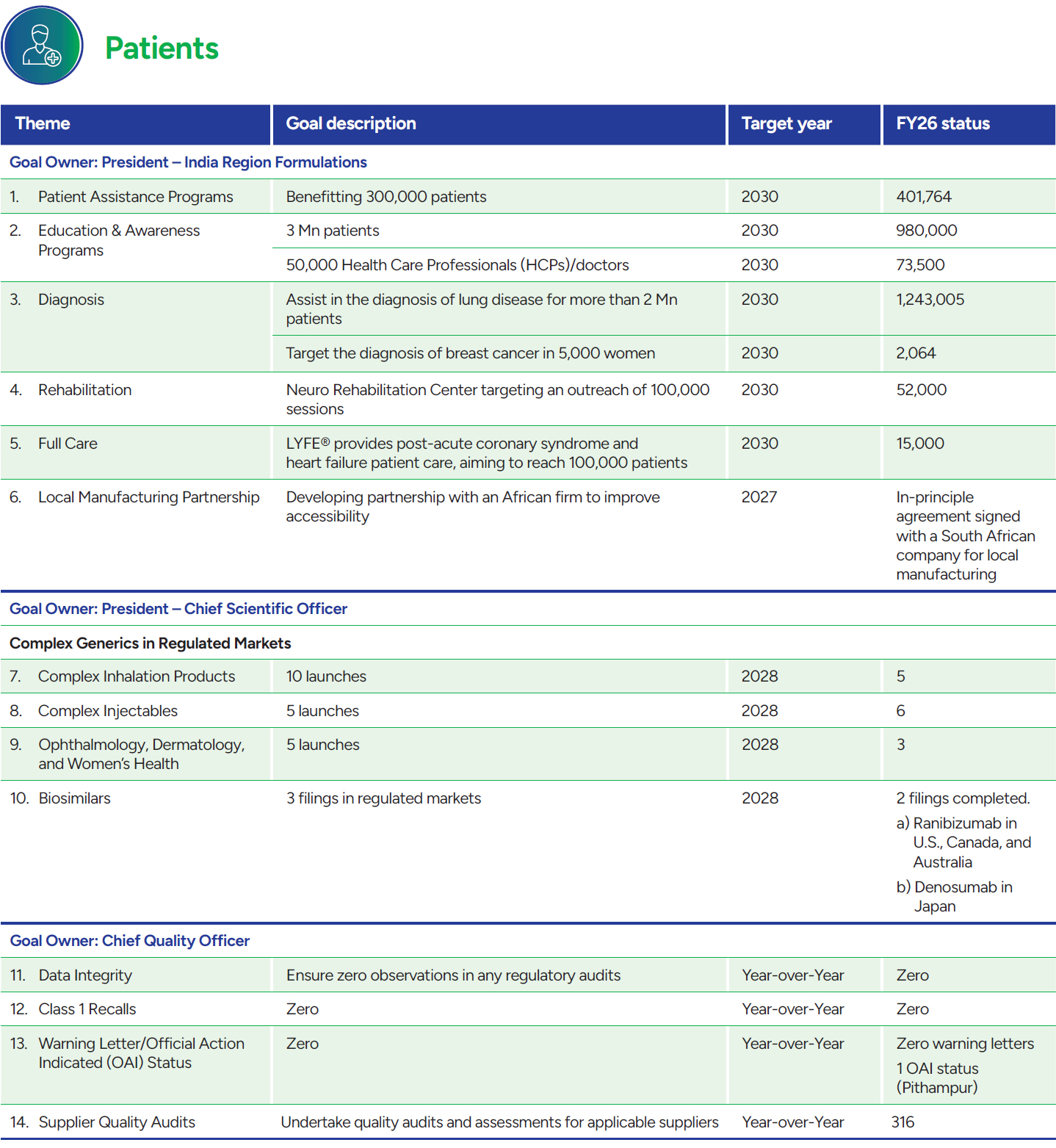
Our ESG targets for FY26 focused on priority areas, including climate action and GHG emissions reduction, water stewardship and recycling, waste management, biodiversity, Diversity, Equity and Inclusion (DEI), supplier ESG assessment, patient-centric innovation, and access and affordability. These targets are assigned to relevant Presidents responsible for these goals and cascaded down to business functions with defined weightages as part of the Annual Performance and Year-End Rewards process.
Sustainability Strategy, Goals, and Progress
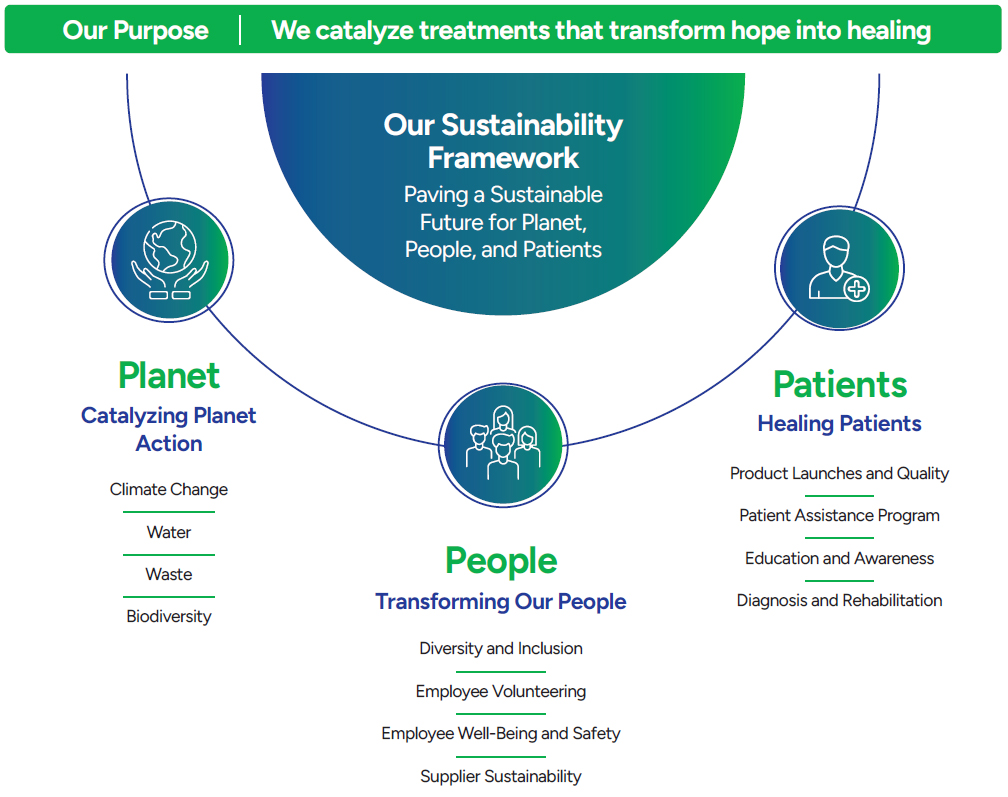
Our Sustainability strategy reflects a deep responsibility to address critical environmental and social challenges across Planet, People, and Patients. We are committed to our founder’s enduring vision of improving patient outcomes and expanding access to healthcare. This mission is anchored by clearly defined priorities, measurable goals, and time-bound commitments, with strong accountability by the senior leadership. Progress is rigorously reviewed at the Board and ESG Core Committee levels, ensuring sustained focus and discipline in execution. Through this purpose-led approach, we continue to create enduring value for society while advancing our sustainability agenda.

ESG Databook
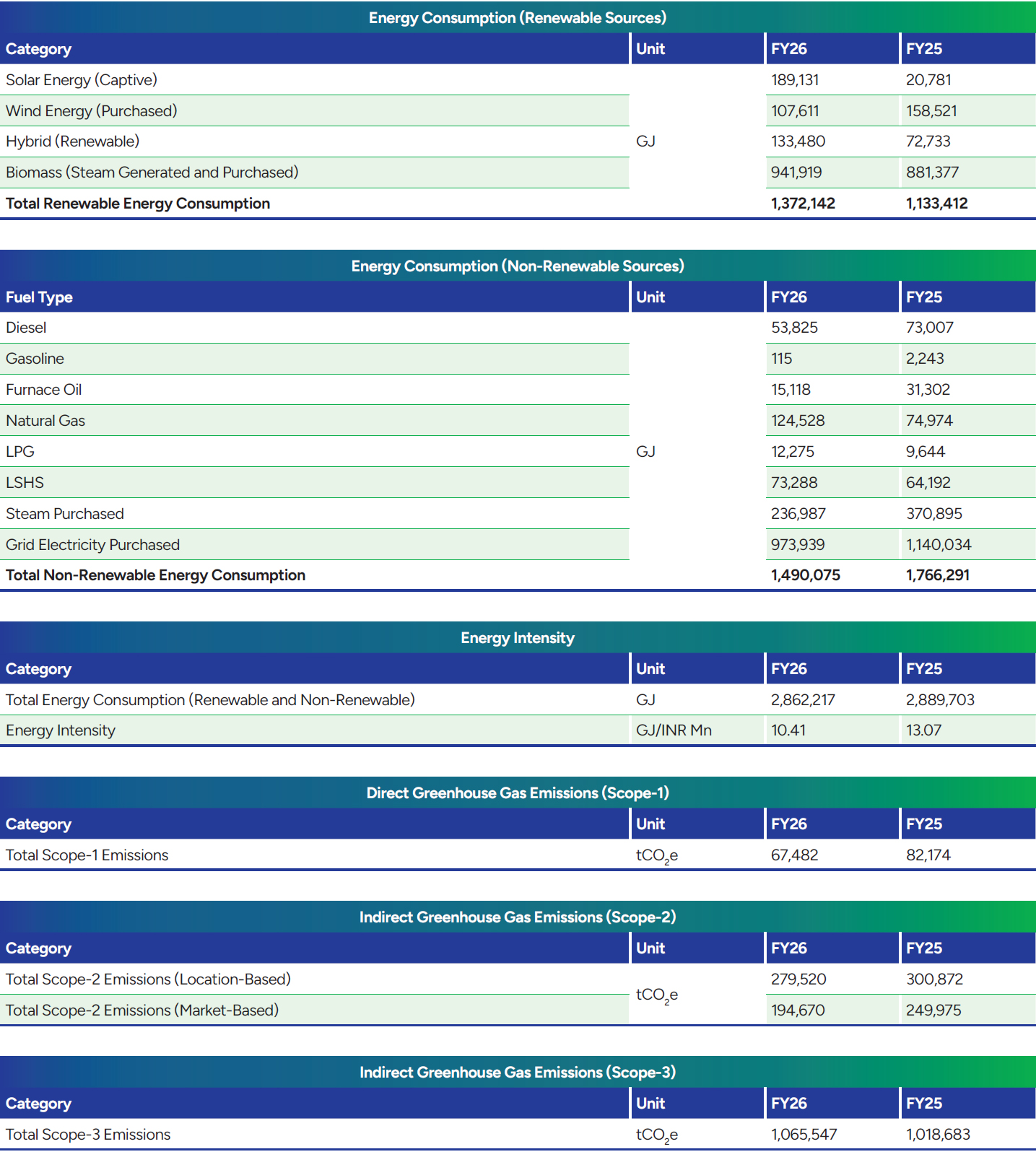
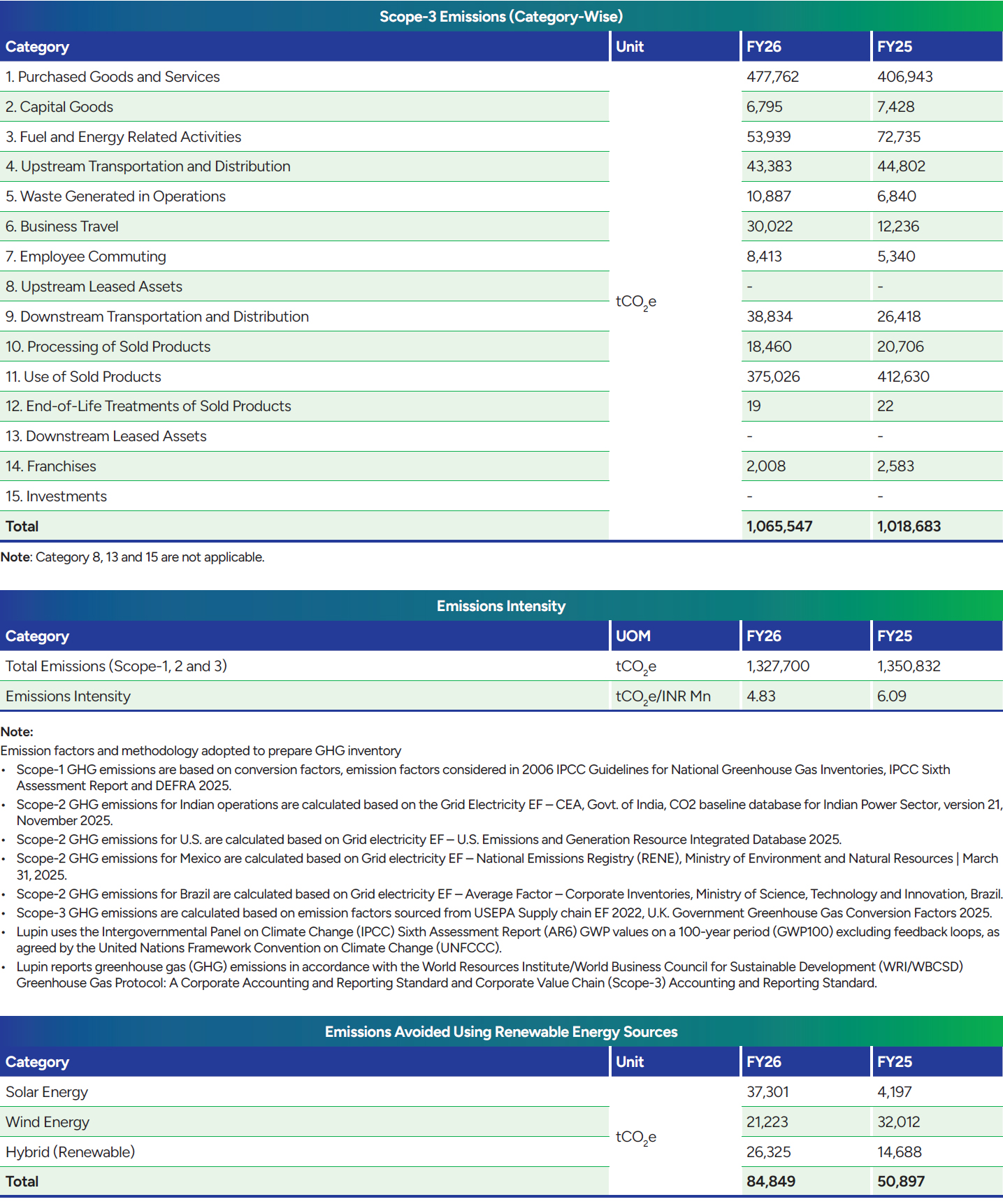
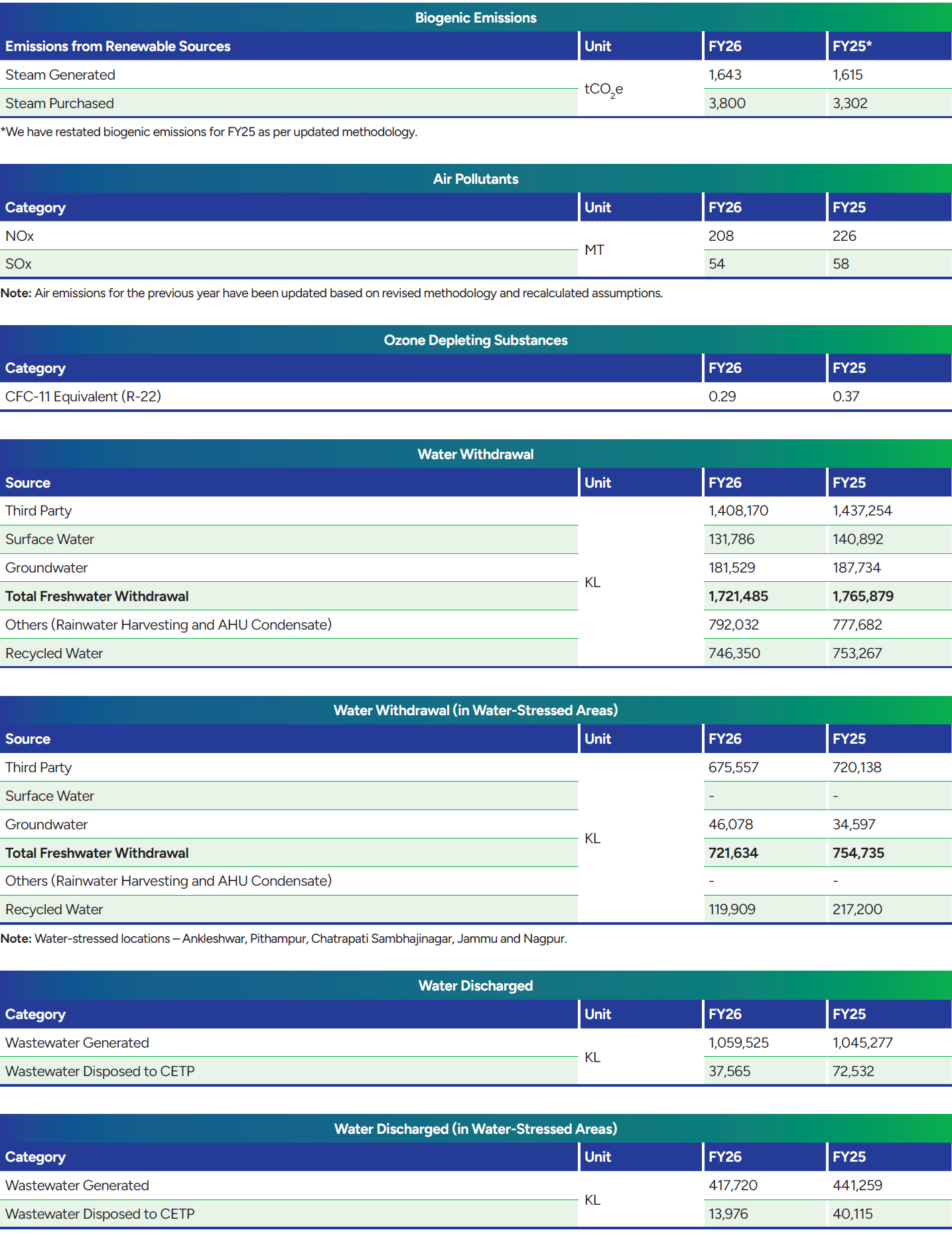
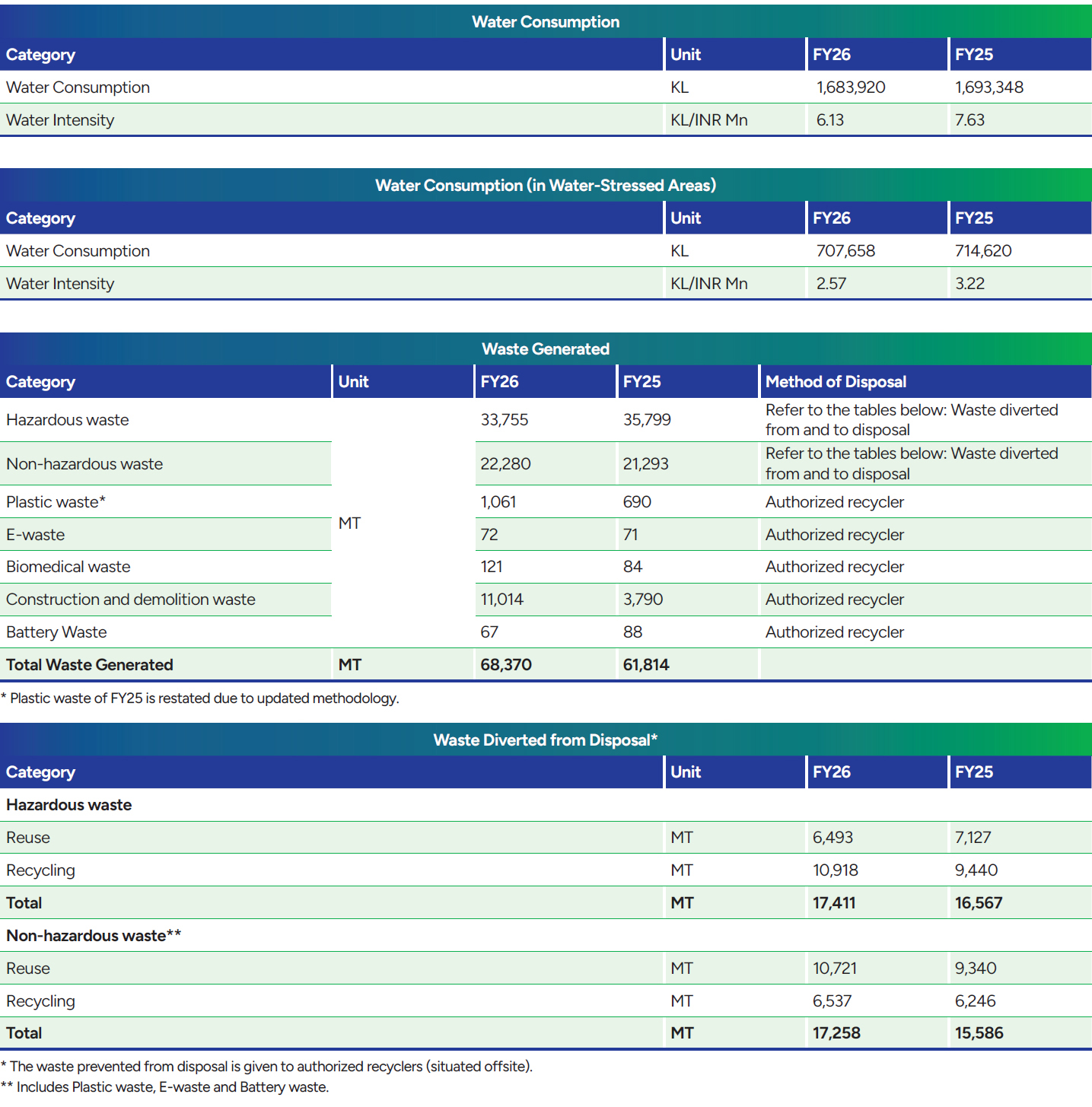
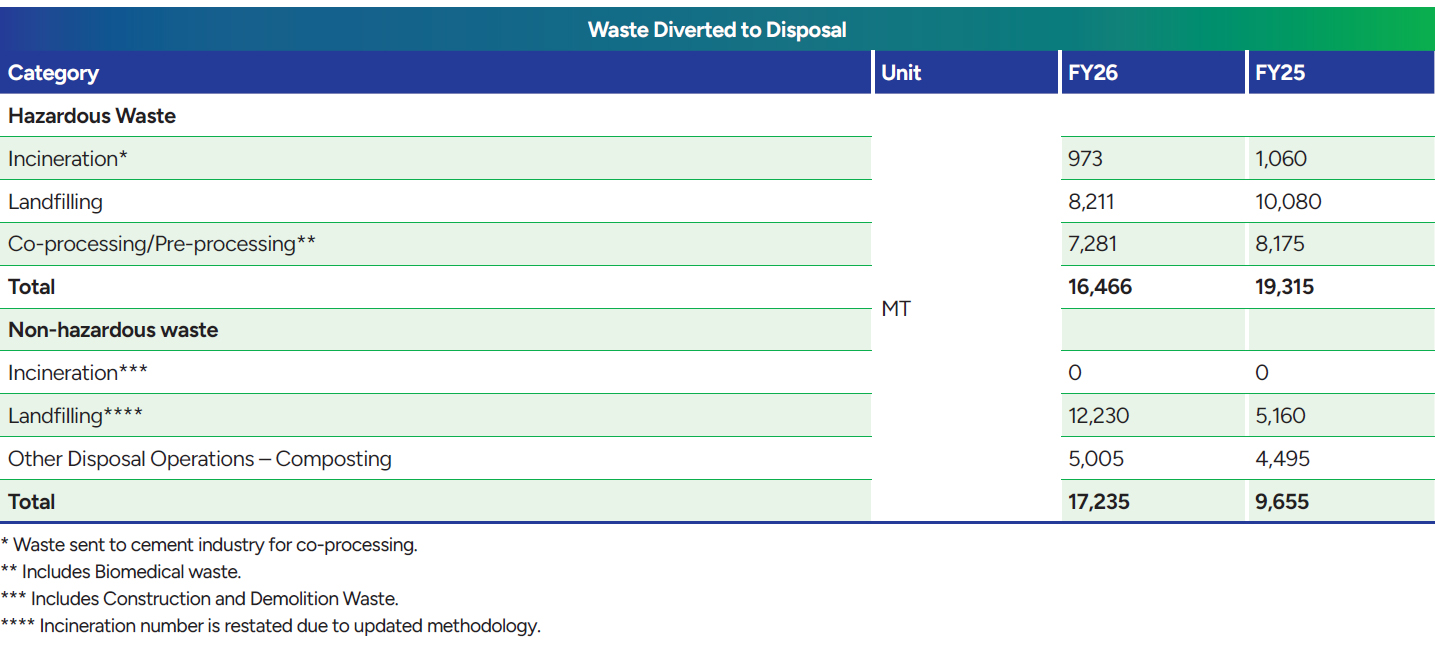
Global Environment Data
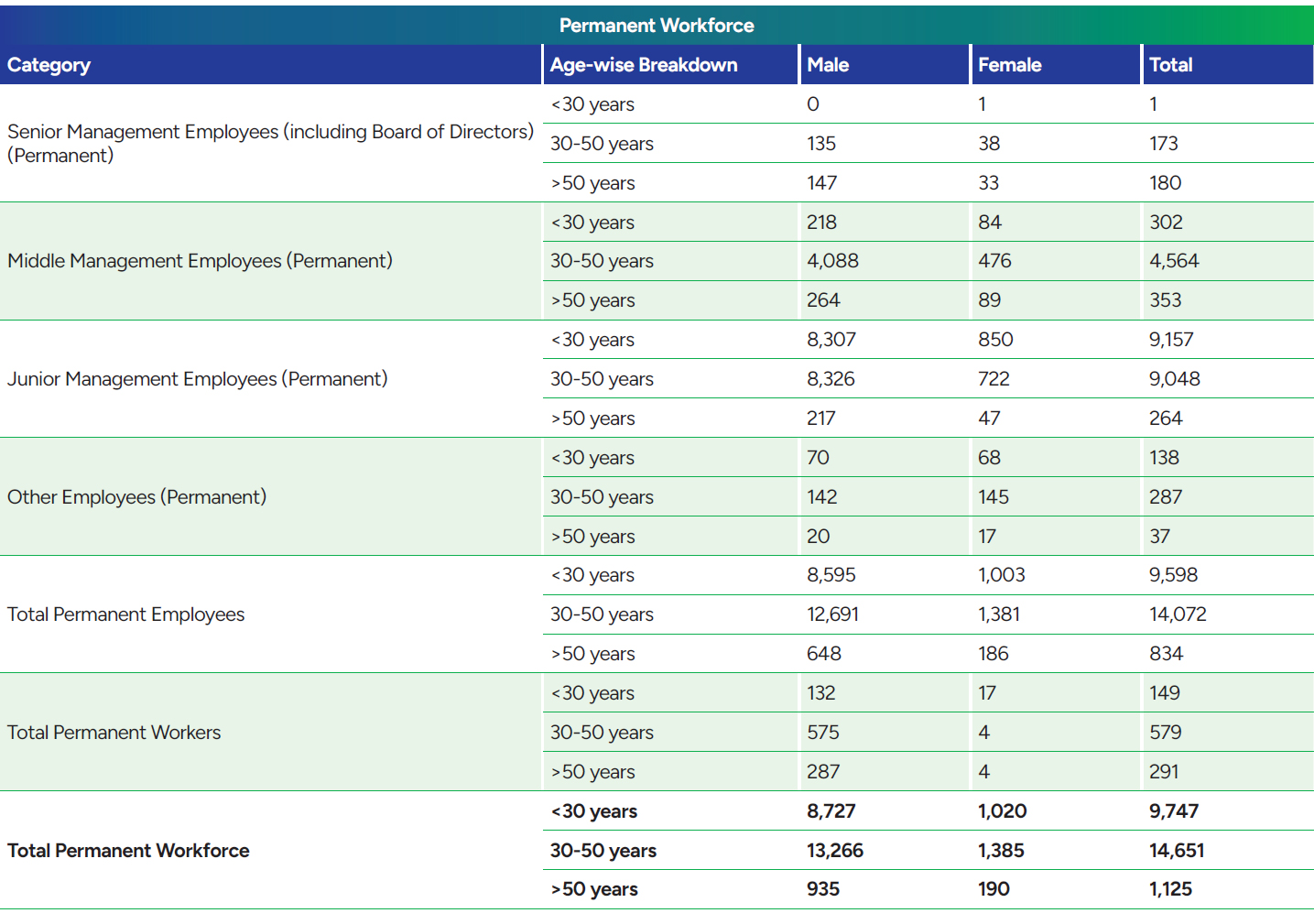
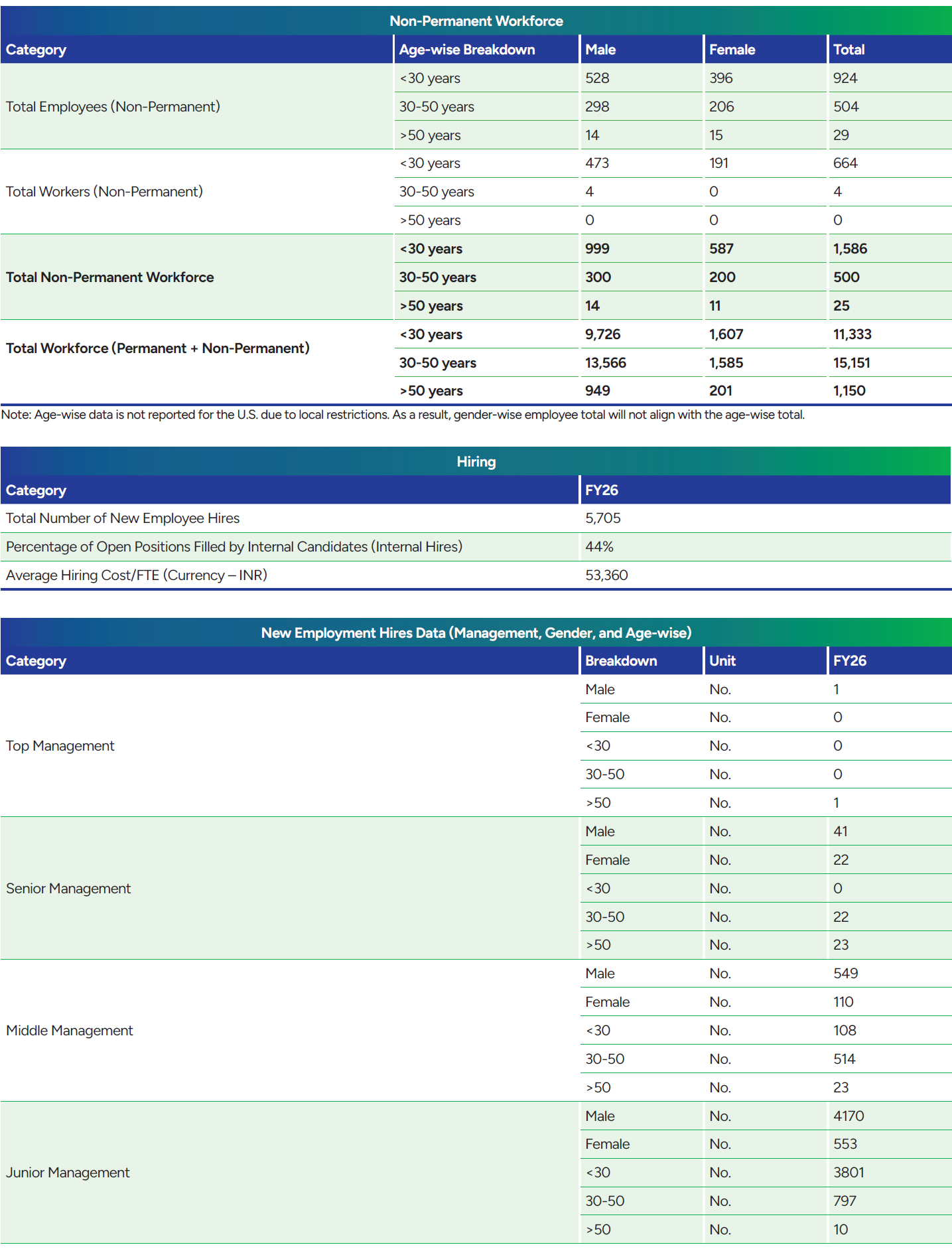
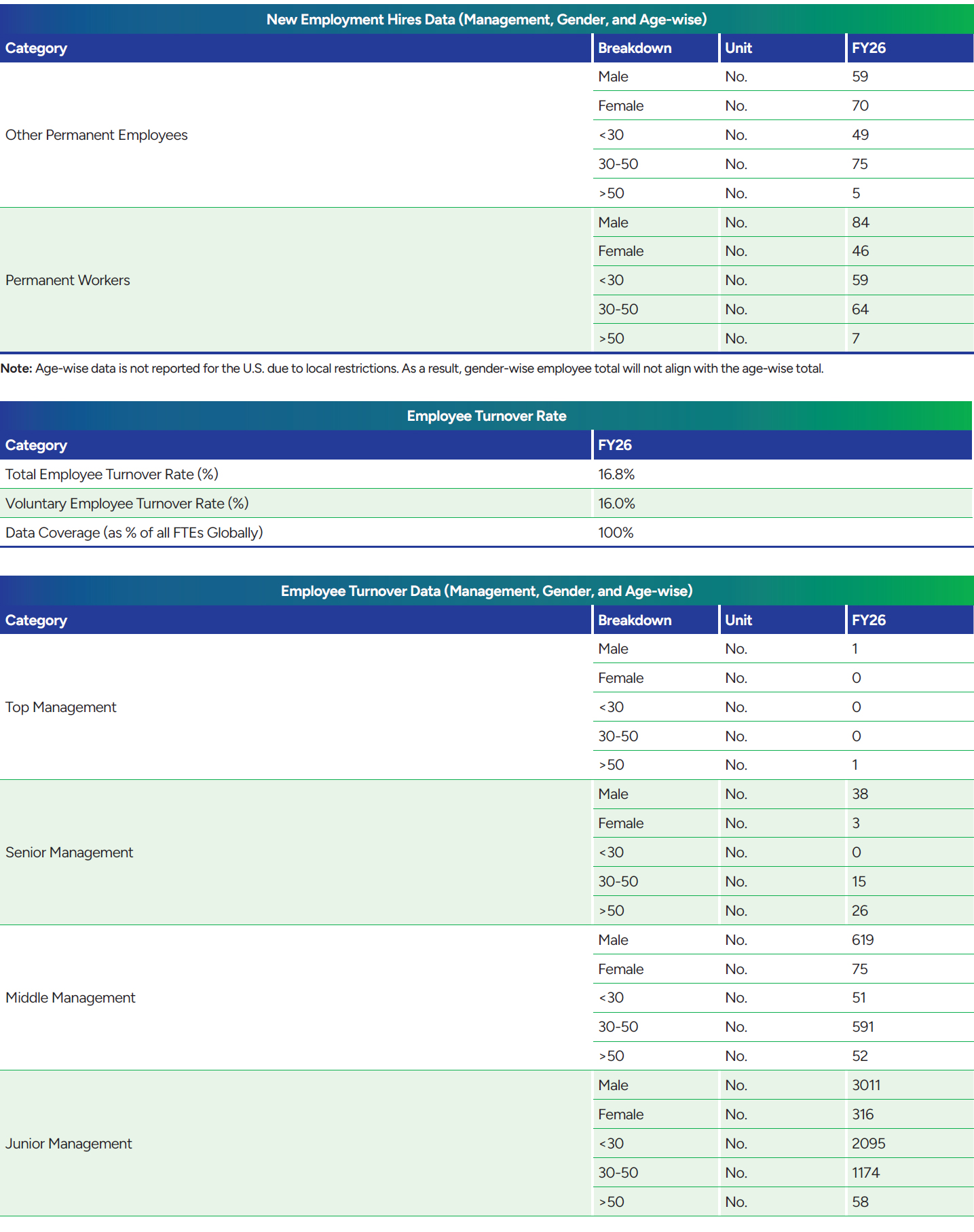
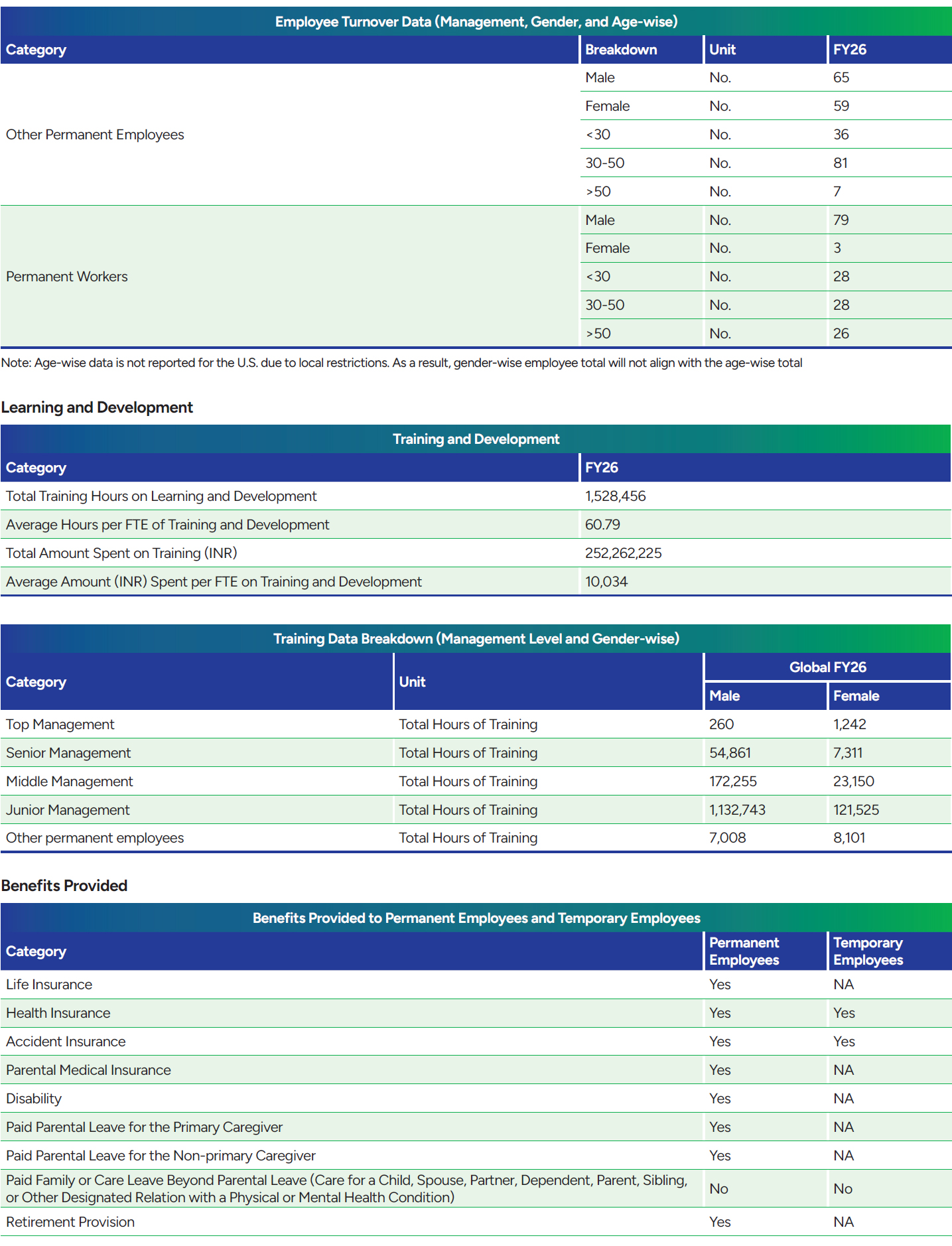
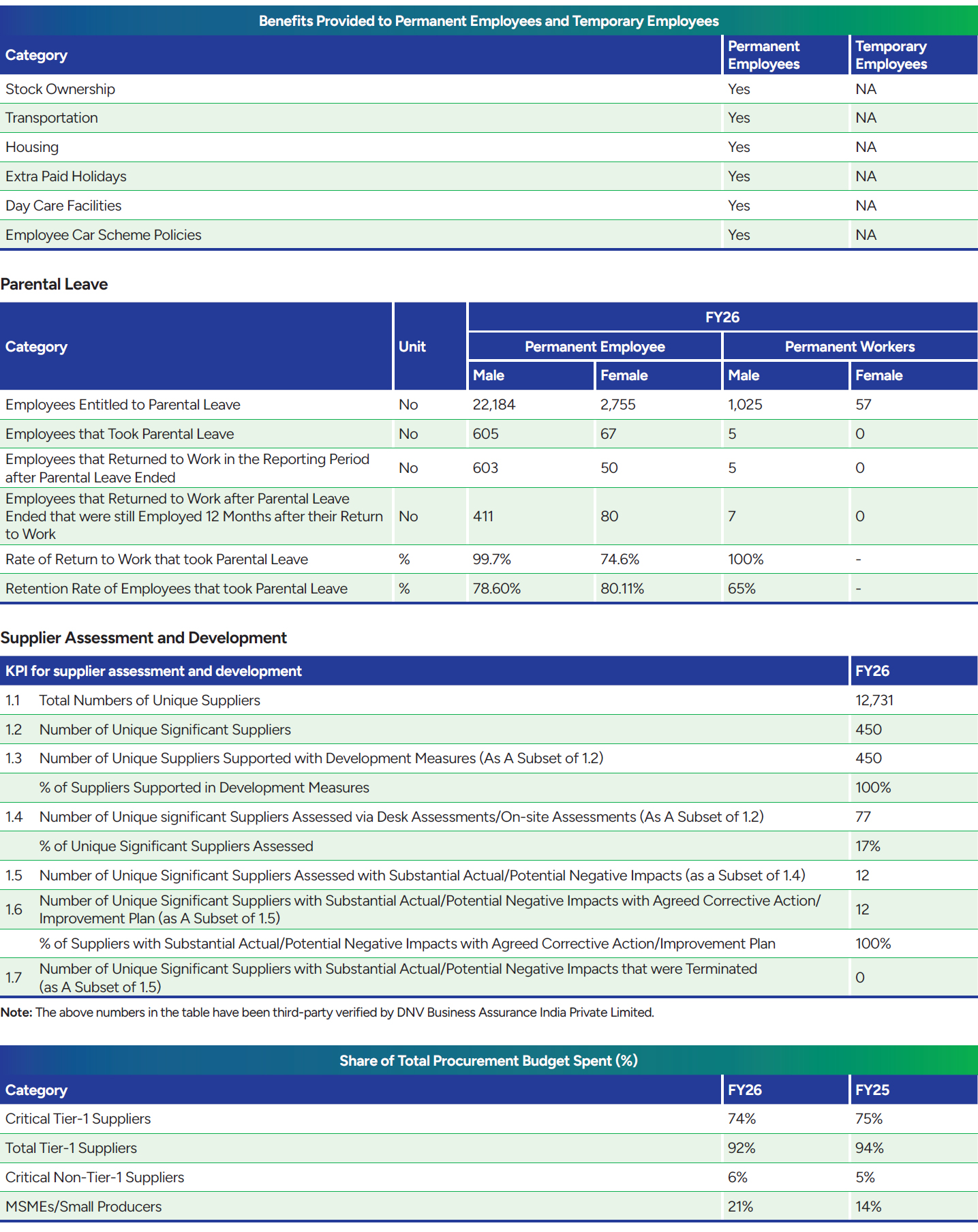
Global Workforce FY26
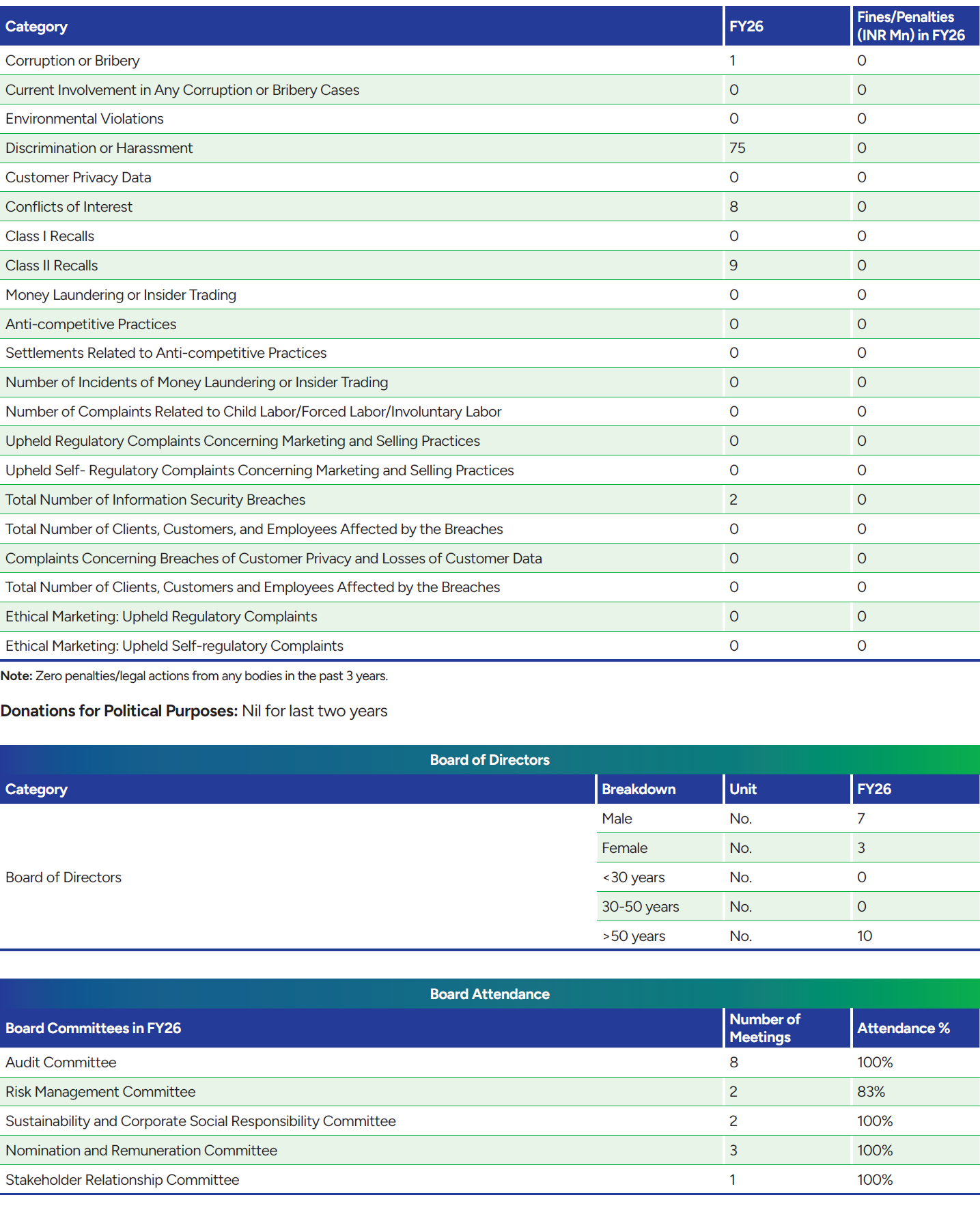
Fines/Settlements/Complaints
 Assurance Statement