
Intellectual
Capital
Driving innovation to shape a more promising future
Our Intellectual Capital serves as a bridge between scientific possibility and human need. Our purpose of catalyzing treatments that transform hope into healing inspires us to meet evolving healthcare needs through scientific excellence, patient-centric innovation, and global reach. By combining deep research expertise, strong development capabilities, digital maturity, and robust governance, we continue to advance solutions that improve access to high-quality and affordable healthcare across India and global markets.
In FY26, we further strengthened our innovation ecosystem through a research model aligned with global healthcare priorities. This is reflected in the depth of our scientific talent, the strength of our intellectual property portfolio, the rigor of our development processes, and our growing capabilities across complex and differentiated therapies. It enables us to convert scientific insight into commercially viable products, support sustainable business growth, and create lasting value for patients, healthcare systems, and society.

INR 20,631 Mn
Research and Development Investments in FY26
584
Cumulative Patents
742
Cumulative Filings
584
Cumulative Approvals
Material Topics

Innovation Management and Research and Development

Artificial Intelligence (AI) and Digitalization

Risk Management and Business Continuity

Ethical Clinical Trials and Animal Testing

Customer Privacy and Data Security

Customer Health and Safety
Management Approach
Our Intellectual Capital is shaped by a cohesive framework that integrates scientific talent, research infrastructure, intellectual property, digital and AI capabilities, knowledge systems, partnerships, and continuous learning underpinned by strong governance. This approach enhances product quality, accelerates development timelines, reinforces regulatory discipline, and enables better patient outcomes.
Over 1,400 scientists and professionals across geographies anchor innovation spanning research, development, quality, manufacturing, supply chain, and enterprise operations. Together, they translate deep expertise into value creation through complex product advancement, protection of proprietary knowledge, data-driven decisions, and capability building for the future, strengthening our standing as a globally relevant healthcare company.
At Lupin, our commitment to innovation is guided by patient needs and strengthened by scientific excellence. By integrating expertise across complex products, biosimilars, novel science, and intellectual property, we are building a differentiated pipeline for the future.
Dr. Shahin Fesharaki Chief Scientific Officer
Research and Development
Research and development remain central to our innovation-led growth strategy. In FY26, we invested INR 20,631 Mn in R&D, representing 7.5% of total sales, reinforcing our long-term commitment to innovation and portfolio expansion.
In FY26, our research team contributed 31 publications based on work conducted at our research facilities. These publications reflect our commitment to scientific excellence, knowledge creation, and continuous advancement. They also reinforce our belief that Intellectual Capital grows when research is not only protected but responsibly shared to advance science.
Our research and development is closely aligned with portfolio and market priorities. We continue to build focused capabilities across inhalation, complex injectables, biosimilars, specialty, and new chemical entities, with development activities spanning the U.S., India, Europe, Canada, Australia, and Global Institutional Businesses, enabling us to respond to differentiated market needs while adhering to the highest global standards in quality, compliance, and regulatory excellence.
We leverage enhanced market intelligence and research capabilities to support timely development and filings in areas of high unmet medical need. This work is enabled by seven specialized research centers, each dedicated to addressing complex scientific challenges while upholding the highest standards expected by patients, regulators, and healthcare systems worldwide.
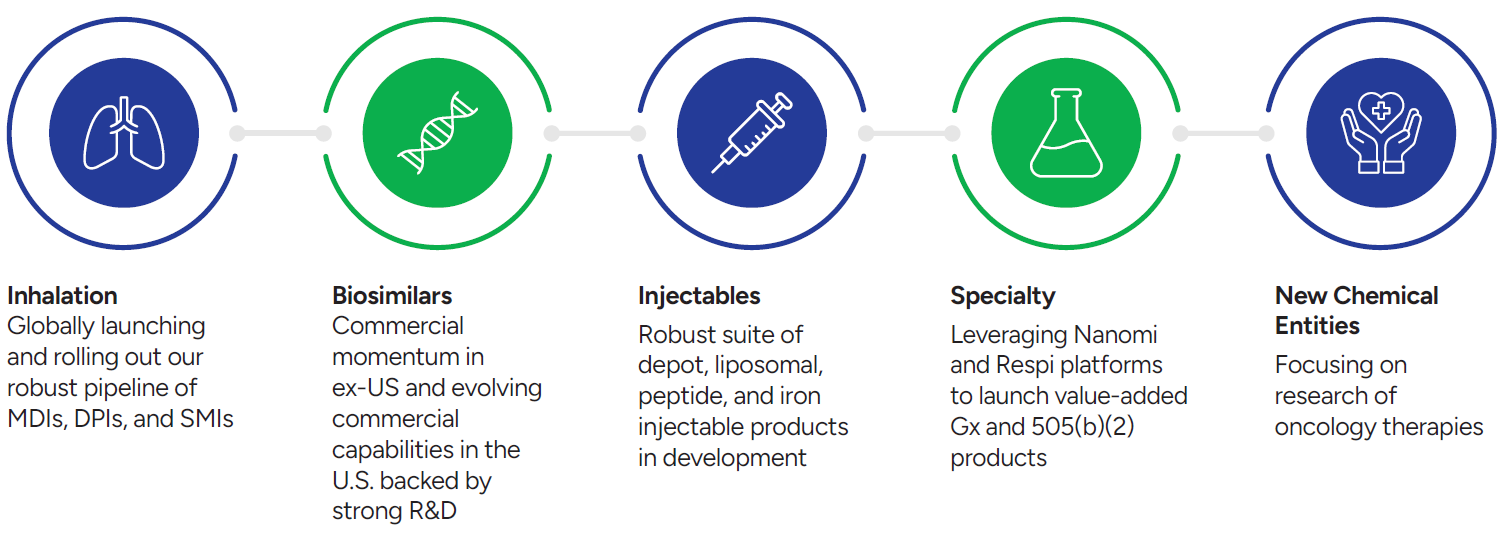
Through disciplined execution, quality-driven development, and strategic investment, we continue to advance our innovation engines and create long-term value for our stakeholders.
Our Product Portfolio
Consistent with our product strategy, we continued to progress during the year towards more complex products while expanding our presence across both existing and new markets. Our filings and approvals in FY26 reflect the depth of our development pipeline, the resilience of our global portfolio, and our ability to navigate diverse regulatory pathways. During the year, we filed 38 products and received 31 approvals, taking our cumulative filings to 742 and cumulative approvals to 584.
| Type of Filing | Filings in FY26 | Approvals in FY26 | Cumulative Filings | Cumulative Approvals |
|---|---|---|---|---|
| NDA | 3 | 0 | 14 | 11 |
| ANDA | 7 | 12 | 430 | 344 |
| ANDSs (Canada) | 2 | 3 | 29 | 16 |
| MAAs (Europe) | 7 | 2 | 57 | 47 |
| MAAs (AU) | 6 | 0 | 61 | 54 |
| MAAs (NZ) | 3 | 0 | 14 | 11 |
| NDA | 2 | 1 | 14 | 10 |
| MAAs (GIB) | 1 | 3 | 27 | 24 |
| MAAs (Brazil) | 1 | 0 | 8 | 6 |
| MAAs (MENA) | 4 | 0 | 7 | 1 |
| MAAs (South Africa) | 0 | 6 | 52 | 44 |
| MAAs (Mexico) | 1 | 1 | 11 | 7 |
| MAAs (Philippines) | 4 | 3 | 31 | 20 |
| MAAs (China) | 0 | 0 | 1 | 0 |
| Total | 38 | 31 | 742 | 584 |

Intellectual Property Protection and Progress
Intellectual property is a strategic enabler of innovation, trust, responsible access, and enduring stakeholder value. We focus on preserving and advancing ideas, data processes, and proprietary knowledge that enable differentiated medicines, while remaining committed to improving access in underserved regions.
Our intellectual property governance is structured around well-defined policies and processes that protect proprietary information, research output, confidential data, and company assets. The Lupin Code of Business Conduct and Ethics sets stringent requirements for intellectual property protection and data privacy, ensuring responsible handling of research data and confidential information. Compliance with these standards is monitored across the organization to protect against unauthorized use or disclosure. The Intellectual Property Management Group (IPMG) plays a pivotal role in securing innovations, shaping our patent estate, and supporting our business strategy. Our IP portfolio spans key global markets, including the U.S., Canada, Europe, Australia, the Philippines, India, and our Global Institutional Business.
As of FY26, our suite comprised 924 active patents and patent applications, including 584 patents granted and 340 pending. These encompass Active Pharmaceutical Ingredients (APIs), formulations, novel chemical entities, and biologics, reflecting our sustained focus on innovation and commitment to delivering high-quality, differentiated solutions for patients worldwide.
| Patent Applications | FY26 |
|---|---|
| Formulations | 44 |
| Active Pharmaceutical Ingredients (APIs) | 16 |
| Biotech | 5 |
| Novel Drug Discovery and Development Application | 1 |
| Total Patent Applications | 66 |
| Patents Secured | FY26 |
| Formulations | 5 |
| Novel Drug Discovery and Development Applications | 120 |
| Total Patents Secured | 125 |
Driven by our commitment to advancing access in underserved regions, we refrain from filing or enforcing patents on treatments addressing priority diseases outlined in the Access to Medicine Index (ATMI) 2021 across least developed, low-income, and lower-middle-income countries. This helps reduce barriers and enables broader access to life-saving therapies.
Biosimilar Research
Biosimilars enable us to translate our purpose into action and are a critical expression of our scientific depth and access-oriented innovation. Advancement in this area is driven by complex development pathways, supported by global regulatory expertise, and strategic expansion of access to high-quality biologic therapies.
In FY26, we continued to expand our biosimilar research and development capabilities across key global markets, including the U.S., Europe, Japan, India, and emerging economies. We ensure that all our programs adhere to stringent regulatory standards and robust quality systems, maintaining consistent safety, efficacy, and reliability.
We advanced commercialization agreements across the U.S., Europe, Latin America, Russia, and India. Our key regulatory milestones included U.S. FDA approval of Pegfilgrastim and EMA approval of Ranibizumab. We also submitted a marketing authorization for Ranibizumab in the U.S., while securing approvals from Health Canada and the Australian TGA. We also submitted Denosumab to Japan’s PMDA and India’s DCGI and filed Aflibercept with India’s DCGI.
We initiated two new global biosimilar programs, extending across critical stages such as cloning, process development, and toxicology studies. Our India-focused programs for Nivolumab and Pembrolizumab also progressed into the clinical development stage.
Biosimilars demand scientific excellence, robust quality systems, and long-term commitment. At Lupin, we bring these capabilities together to expand access to complex biologic medicines, bringing our purpose to fruition.
Dr. Cyrus Karkaria
President – Biotech Business
In FY26, we completed key validation milestones for our biosimilar advancements, with pivotal trials successfully meeting primary endpoints for biosimilars of Aflibercept, Denosumab, Nivolumab, and Pegfilgrastim.
New Chemical Entities
Our work in New Chemical Entities reflects our commitment to advancing differentiated science for areas of significant unmet medical needs. In FY26, we furthered our novel drug discovery efforts across three priority therapeutic areas: oncology, immunology, and metabolic disorders. Our New Chemical Entity (NCE) pipeline continues to move from early research toward clinical development, with the aim of translating scientific innovation into meaningful patient outcomes. Our strategy remains centered on a disciplined, evidence-led approach, balancing organic innovation with strategic partnerships to accelerate development.
Research and Development Partnerships and Collaborations
Partnerships are an important extension of our innovation model. In a rapidly evolving healthcare landscape, collaboration enables us to access external science, advanced technologies, cross-sector expertise, and new commercialization pathways.
Expanding Access to Drug Resistant Tuberculosis Treatment
In FY26, we entered into a strategic collaboration with the TB Alliance to support the clinical development and commercialization of Telacebec, also known as Q203, an investigational therapy for tuberculosis, leprosy, and Buruli ulcer. While TB Alliance leads clinical development, Lupin contributes to manufacturing, regulatory, and supply chain capabilities to enable broad patient access. We also hold a non-exclusive license to manufacture and commercialize Pretomanid, a key component of the BPaL regimen for drug-resistant tuberculosis. This enables supply to over 140 countries and territories and remains central to our commitment to improving global TB outcomes.
Advancing Sustainable Respiratory Care
Respiratory care is a key domain where innovation, access, and sustainability intersect. Building on our FY25 milestone as the first pharmaceutical company in India to adopt Solstice® Air (HFO-1234ze cGMP), we are progressing towards next-generation pressurized metered-dose inhalers (pMDIs) with near-zero global warming potential. Regulatory filings are underway in key global markets to support timely commercialization.
Low Global Warming Potential (GWP) inhalers account for approximately 35% of our Scope-3 emissions reduction potential. Products for asthma and Chronic Obstructive Pulmonary Disease (COPD) are under development, with launches planned over the next few years.

Lupin’s case study on ‘Green Inhalers with Near-Zero Climate Impact’ was presented at the U.N. Climate Change Conference 2025 (UNFCCC COP30).
Research Accessibility and Transparency
Scientific progress is anchored in trust, transparency, and responsible sharing of knowledge. At Lupin, research accessibility is part of our commitment to stronger evidence, better health decisions, and improved patient outcomes.
We actively share clinical trial and post-launch outcomes, together with anonymized patient data, participant demographics, and health economic insights. This information is made available to a diverse stakeholder ecosystem, including researchers, participants, payors, regulators, healthcare professionals, and patient advocacy groups.
We systematically undertake post-launch observational studies to generate patient-level clinical evidence, with emphasis on safety and effectiveness. These studies are regularly published on our website and clinical research registries, such as clinicaltrials.gov. We believe responsible data sharing is integral to accelerating scientific discovery and, over time, extending access to healthcare.

ESMO Congress Presentation (FY26)
Session: Phase 1 Dose Escalation Study of LNP3693 (STING Agonist)
Category: Investigational Immunotherapy
Clinical Trial Registration Number: CTRI/2023/10/059147
Advancing Equitable Access to Healthcare
Equitable access serves as a guiding principle shaping our decisions across innovation, intellectual property, clinical development, and portfolio strategy. Our R&D strategy is directed toward addressing critical gaps in care and evolving health challenges, coupled with enabling timely and affordable access where it delivers the greatest patient impact.
The clinical development programs we undertake are structured to enable diverse participation across gender, age, and geographies. Together, these efforts ensure that Lupin’s innovation pipeline advances inclusive, responsible, and accessible healthcare.
Animal Testing and Welfare
We uphold ethical and responsible use of animals in research, limiting studies to instances of clear scientific necessity and absence of validated alternatives, in compliance with applicable regulations. Our practices align with the globally recognized 3Rs framework – Replacement, Reduction, and Refinement – minimizing animal use while strengthening welfare standards.
All studies are reviewed and approved by the Institutional Animal Ethics Committee (IAEC) and conducted in line with applicable national and international regulations. Our programs ensure humane housing, enrichment, veterinary care, trained personnel, and regular audits, including independent third-party reviews.
We also continue to invest in the development and adoption of alternative testing methods to reduce dependence on animal studies over time.
Driving Digital Trust and AI-Led Transformation
As Lupin continues to scale its capabilities in AI, data platforms, and connected enterprise systems, digital trust remains central to our transformation. Our framework integrates robust cybersecurity, disciplined data governance, responsible AI, and operational resilience, enabling innovation while reinforcing stakeholder confidence.
Our Information Security Management System (ISMS) is aligned with ISO 27001:2022 across manufacturing, R&D, and corporate functions, supported by a Zero Trust security architecture, real-time threat detection and response, and adherence to CERT-In requirements.
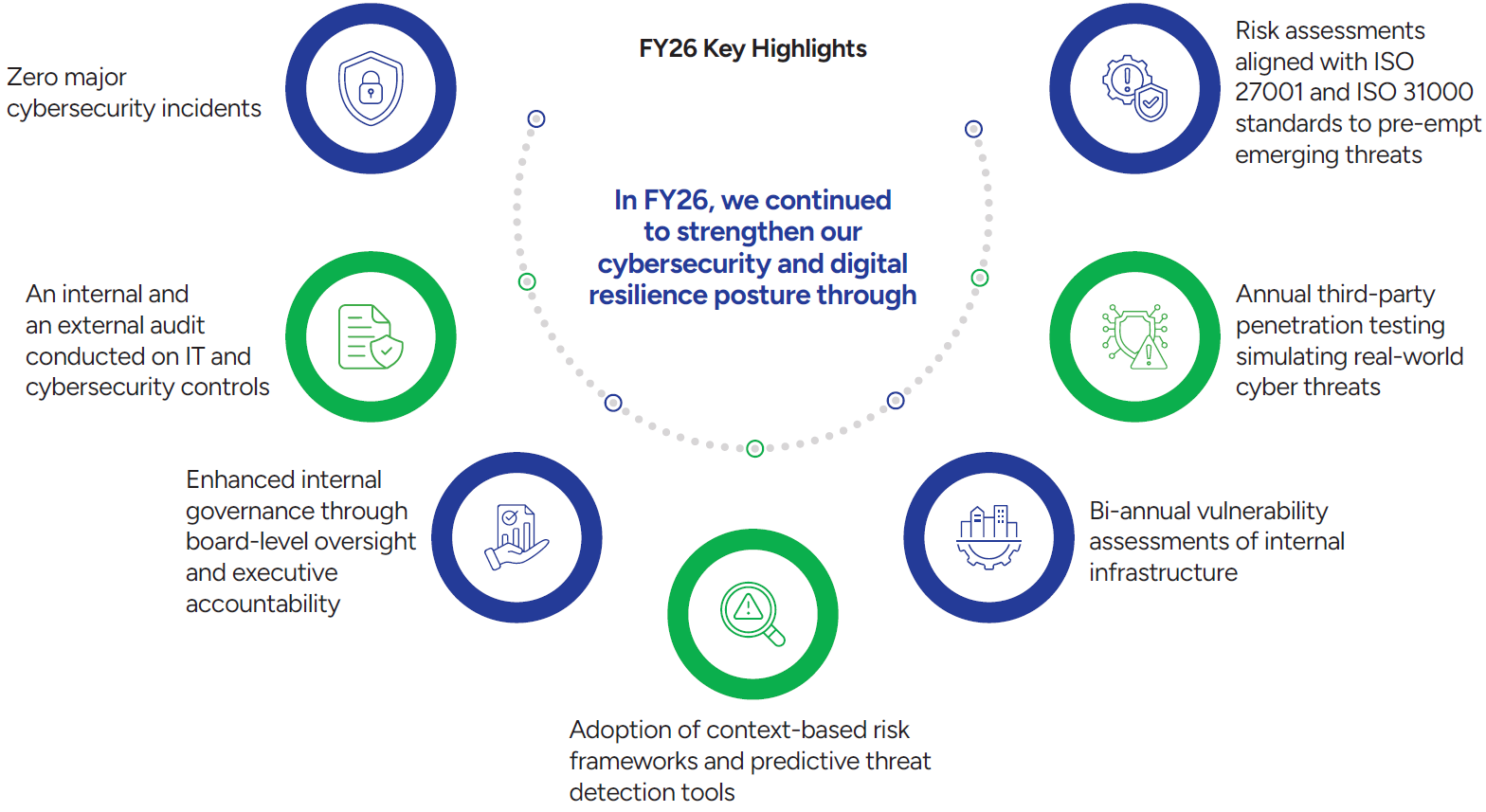
Cybersecurity governance is led by the Board of Directors through the Risk Management Committee, with the Global CFO serving as its principal authority. Oversight and execution are carried forward by the Global Chief Information Officer, who reviews and implements SOPs and policies and ensures ongoing compliance.
Empowering Our People in Cybersecurity and Responsible AI
Secure. Fair. Transparent. Accountable.
Digital transformation is driven not only by technology, but by the people who use it. At Lupin, we foster a culture of shared responsibility, continuous learning, and disciplined governance to build digital trust, resilience, and the secure, compliant use of technology.
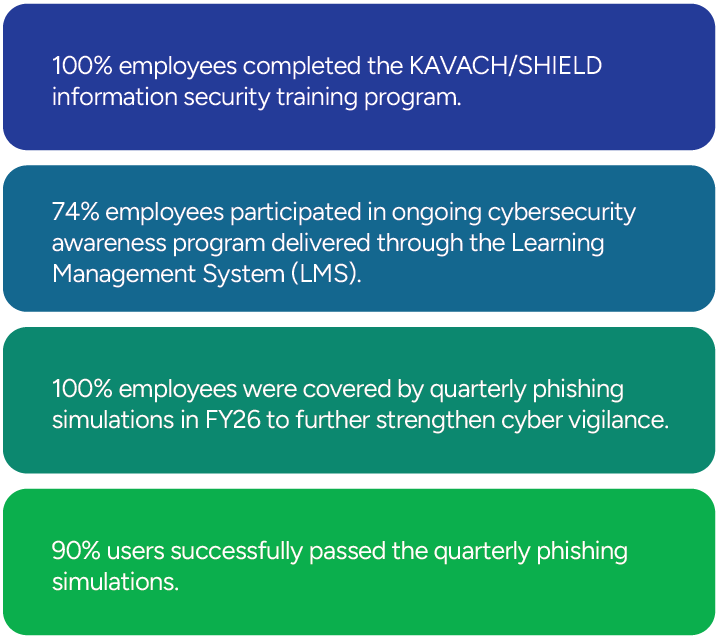
In FY26, our focus on cybersecurity awareness and vigilance was reinforced through enterprise-wide training and simulation programs. Internal and external audits conducted by professionally qualified auditors further validated the effectiveness and operating rigor of our security controls. These initiatives continue to strengthen our security-conscious culture and enhance the resilience of our digital foundation.

Advancing Responsible AI and GenAI Transformation
We continue to embed AI and GenAI across research, manufacturing, quality, supply chain, and enterprise operations to further our purpose of delivering better health outcomes. These capabilities enable greater innovation, agility, and decision support, while reinforcing operational excellence and responsible governance.
We have established a robust AI policy and governance framework to uphold data privacy, mitigate bias, ensure transparency, maintain human oversight, and ensure accountability. Human oversight remains integral to critical and high-impact AI applications, ensuring ethical deployment, regulatory compliance, and trusted outcomes.
In FY26, AI-led initiatives delivered INR 428 Mn in cost savings and reclaimed 34,336 man-days.
Scaling AI-Led Transformation Across the Value Chain
Our agentic AI solutions are being developed across the enterprise value chain, including sales, research, manufacturing, quality, supply chain, HR, and Finance. These solutions are designed to augment human judgment, improve the speed and consistency of decision-making, and create scalable digital capabilities that strengthen business outcomes.
This progress reflects the sector’s growing digital and AI maturity and highlights the transformative impact of enterprise technology in improving quality, efficiency, and productivity. From an initial pool of 250+ ideas, we are working on over 25 high-impact use cases across core functions. These are being built on reusable enterprise platforms and are progressing toward scale, now enabling over 15,000 users. Adoption is being strengthened through targeted AI fluency initiatives and robust governance frameworks.
Agentic AI Solutions Across the Value Chain
| Solution | Purpose |
|---|---|
| Sales Rep Digital Assistant, Smart Buddy | AI-powered co-pilot supporting call planning, content generation, and competitive intelligence for field teams. |
| Quality Documentation Co-Author | Multi-agent solution, supporting intelligent authoring, compliance validation, and risk insights across quality processes. |
| Manufacturing and Maintenance Insights Hub | Context-aware assistant enabling troubleshooting, trend analysis, and intelligent insights across manufacturing and maintenance domains. |
| Supply Chain Insights Hub | Scenario analysis solution enhancing responsiveness to demand and supply signals. |
| OOS Navigator | AI-enabled support for more efficient and effective out-of-specification investigations through insights, root cause recommendations, and CAPA support. |

Enterprise GenAI Platform and AI Operating System
These solutions are underpinned by an enterprise-grade GenAI platform with reusable services, modular architecture, LLM orchestration, and enterprise-grade security, designed to accelerate responsible scale.
To operate AI, we have established an Enterprise AI Operating System with the purpose of scaling responsible intelligence, anchored on six building blocks.
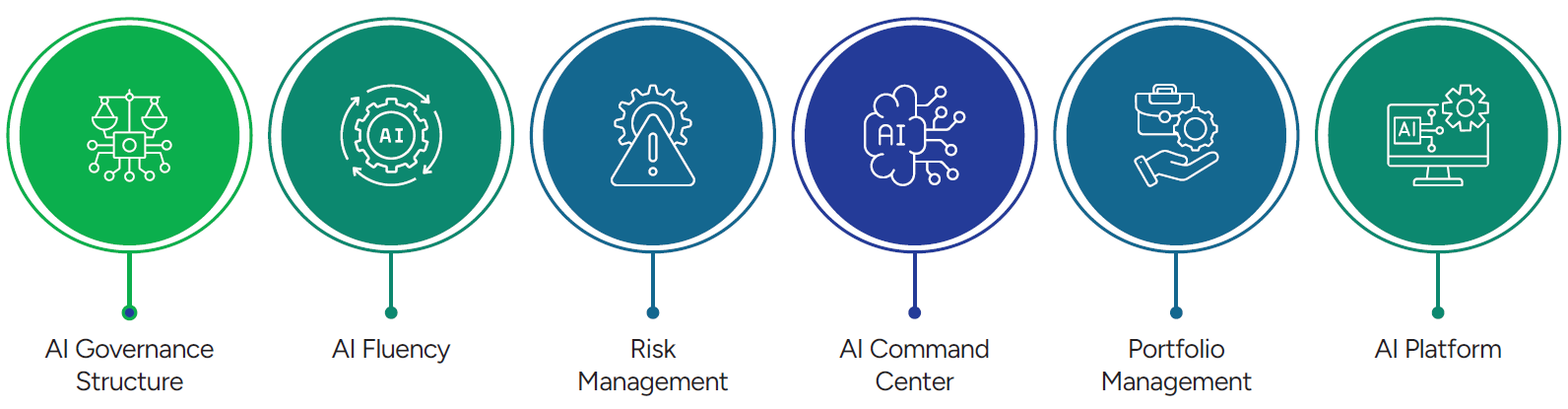
Together, these capabilities provide a unified framework for scaling AI responsibly, from ideation and deployment to monitoring and value realization.
Building Talent for an AI-Powered Enterprise
Know AI. Use AI. Lead with AI.
AI transformation is as much a people imperative as a technology priority, and at Lupin, we are building an AI-ready enterprise by design through capability development, data and digital fluency, and new ways of working.
This model extends across the ecosystem through co-creation with partners, domain experts, and cross-functional teams, strengthening adoption, accelerating innovation, and enabling sustained value creation. Backed by responsible governance, scalable platforms, and empowered talent, we are building an interconnected enterprise where science, data, and technology translate into better patient outcomes.
Resilience Through Business Continuity
Business continuity is fundamental to sustaining patient access, dependable supply, stakeholder trust, and organizational readiness. In line with this, we have implemented a Business Continuity Management framework aligned with globally recognized BCMS standards, informed by a comprehensive Business Impact Analysis and reinforced through tabletop recovery exercises at our Head Office.
The Business Continuity Plan (BCP) is deployed across manufacturing sites, research centers, and corporate offices, ensuring uninterrupted critical operations during disruptions.
Way Forward
Our Intellectual Capital strategy will continue to be driven by scientific excellence, responsible innovation, digital strength, and equitable access. We will further expand biosimilars and novel drug programs, enhance AI integration across the value chain, and reinforce data governance, cybersecurity, and business continuity.
Going forward, our innovation model is defined by scientific capability, research discipline, digital maturity, and innovation talent. Integrating innovation with sustainability, access, quality, and trust positions us to deliver sustained, purpose-led value for patients and stakeholders globally.
 Assurance Statement