
Advancing Access to High-Quality
Medication Worldwide
Our biosimilars business is a fundamental building block of the global healthcare vision we carry. It combines deep scientific excellence, cutting-edge technology, high-end manufacturing and vast regulatory expertise to improve access to affordable yet advanced, research-driven therapies.
Established in 2008 in Pune, India, Lupin Biotech is our dedicated research center and state-of-the-art manufacturing facility to develop biosimilars. From development, including cell lines, processes and assays, to clinical testing, regulatory submissions and commercial manufacturing, the center continues to expand its biosimilar capabilities for global markets.

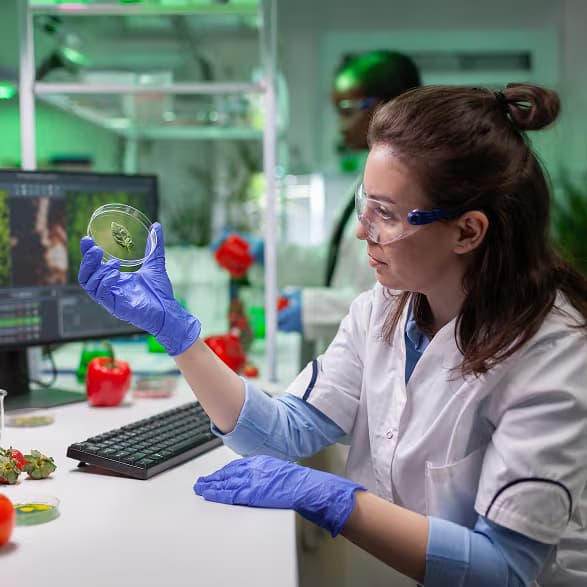
Biosimilars are biologic medicines that are highly similar to an already approved reference biologic in terms of their quality, efficacy and safety. Unlike other small-molecule drugs made through chemical synthesis, biosimilars are manufactured using living systems, making their development scientifically complex and highly regulated.
As per the World Health Organization, biosimilars are highly similar and safe alternatives to their biologic versions, and are about 60% cheaper than their originator counterparts.
Recently, there has been significant potential for growth in the biosimilars market, particularly in oncology, immunology, and ophthalmology. Consistent with these global trends, our biosimilars operations are expanding across comparable therapeutic domains, through a vast and evolving portfolio.


In recent years, we at Lupin have strengthened our biosimilars presence through technology-based differentiation, strategic launches, regulatory filings, and commercial partnerships, supported by a resilient supply chain and scalable manufacturing infrastructure. Looking ahead, our biosimilars strategy is guided by three priorities.

Expanding access to vital biologic therapies
Increasing relevance across global markets
Excellence in scientific innovation and operational tactics
The manufacturing platform at Biotech is designed to support global operations through
Cell line development, upstream and downstream process development, analytical characterization, formulation and device development, and regulatory science



cGMP-compliant microbial and mammalian manufacturing facilities for clinical and commercial supply
Across pre-clinical, clinical, and regulatory pathways aligned with leading global agencies


Robust systems and processes aligned with stringent international standards
This integrated model enables us to develop complex biosimilars efficiently while maintaining consistency, quality, and supply reliability.
Our biosimilars portfolio spans multiple disease areas where biologics play a critical role in patient care, including:

Immunology and Inflammatory Diseases
Oncology and Supportive Care
Ophthalmology
Respiratory

Our flagship biosimilar is used in treating chronic immune-related inflammatory diseases such as rheumatoid arthritis, psoriatic arthritis, axial spondyloarthritis, and plaque psoriasis.



It is used in oncology supportive care to help manage chemotherapy-induced neutropenia.
Our biosimilar developed for ophthalmic indications reinforces our presence in complex therapies for retinal disorders.


Our biosimilars range is designed with a global outlook in mind, from inception to reaching the very end of the supply chain. We have introduced biosimilars in more than 30 countries (the United States, Europe, Japan, Canada, Australia, India, emerging markets such as Latin America, Asia Pacific, the Middle East, North Africa, CIS and Russia) and are continually expanding into newer geographies, breaking barriers to access and strengthening our global footprint. Our global reach is driven by a hybrid commercial model, with direct presence in key regions and strategic partnerships elsewhere.
We at Lupin remain committed to expanding our biosimilars portfolio and capabilities by fostering a culture of scientific excellence, collaboration and continuous improvement.
We will continue to focus on unmet medical needs through advances in biosimilar research, ensuring that complex therapies become more affordable and accessible for all.