





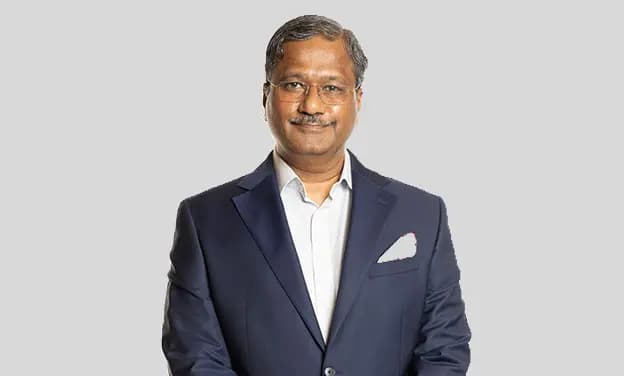
Ramesh Swaminathan says the Indian pharmaceutical industry still faces major gaps in waste management, water circularity, green chemistry adoption and Scope 3 emissions reduction despite progress in renewable energy and operational efficiency.
As climate risks, stricter disclosures and supply chain disruptions reshape global healthcare, pharmaceutical companies are under growing pressure to rethink the way they manufacture, source and innovate.
In a virtual interaction with BW Businessworld, Ramesh Swaminathan, Executive Director, Global CFO, Head of IT and API Plus Sustainability at Lupin, spoke about the company's ESG journey, its decarbonisation strategy and the growing importance of water security and climate resilience in pharma operations. He also discussed green inhaler innovation, renewable energy adoption and why sustainability must remain a long-term commitment irrespective of shifting global political priorities.
Lupin has increasingly focused on ESG in recent years. How has this journey evolved?
Our foundations were always rooted in providing affordable medicines across Indian society. Sustainability and social responsibility were already embedded in our DNA long before ESG became a formal framework.
While we formally articulated our ESG programme only over the last few years, these principles have guided the way we do business for a long time. Over the last three to four years, we have structured this into clear policies, targets and measurable outcomes. Today, we align ourselves with several international frameworks and reporting standards. ESG priorities are embedded into corporate objectives and linked to variable compensation, with performance tracked through the same metrics applied to financial outcomes.
We reassessed global operations and value chain emissions in 2024 to refine our decarbonisation strategy and align it with the Science Based Targets initiative (SBTi) standard. Based on this, we set targets to reduce Scope 1 and 2 emissions by 42 per cent by FY30 using FY23 as the base year and reduce Scope 3 emissions by 61.07 per cent per unit value by FY33 using FY24 as the base year.
Our largest gains have come from decarbonising energy and operations through transition of boiler systems from fossil fuels to biomass and agro-waste, along with scaling renewable energy through 6 MW of on-site solar and 52 MW of green power procurement. We have also shifted a significant portion of logistics from air freight to sea freight. These interventions, along with efficiency improvements, have driven more than 40 per cent reduction in Scope 1 and 2 emissions in FY26 compared to FY23, with renewables contributing around 50 per cent of our energy mix in India.
Another major area has been product innovation. In respiratory care, we are developing next-generation inhalers using low or near-zero global warming potential propellants. Propellants currently contribute around 35 per cent of Lupin's overall Scope 3 emissions, and green inhalers have the potential to reduce related emissions by more than 90 per cent. The respiratory segment is inherently carbon-intensive, with over 500 million COPD and asthma cases globally relying on pMDIs (pressurized metered-dose inhaler) using high global warming potential propellants. Each inhaler contributes approximately 20–25 kg CO₂e over its lifecycle.
The pharmaceutical sector uses large amounts of energy, water and chemicals. Where do you think the Indian pharma industry still needs to improve?
The Indian pharmaceutical industry has made notable progress on sustainability, particularly among leading companies, but there is still significant ground to cover in waste management, water usage and emissions reduction.
Waste management remains uneven across the sector. While large manufacturers have implemented practices such as zero-liquid discharge, solvent recovery and improved hazardous waste handling, adoption across MSMEs and cluster-based units remains inconsistent. Areas such as API residue management, antibiotic discharge control and scientific waste segregation require stronger enforcement and standardisation.
Water intensity is another critical area. Pharma manufacturing is inherently water-intensive and although recycling and reuse have improved, there is still significant scope to scale water circularity and reduce freshwater dependency.
On emissions, the industry has made progress on Scope 1 and Scope 2 through renewable energy transition and efficiency improvements. However, Scope 3 emissions linked to raw materials, logistics and packaging remain an evolving area. Green chemistry adoption is also at an early stage. There is significant opportunity to redesign manufacturing processes to reduce solvent use, hazardous chemicals and energy intensity, particularly in API production. Across the industry, supply chain alignment is still evolving. Supplier compliance, low-carbon sourcing and standardised reporting frameworks are not yet fully embedded across the ecosystem.
You mentioned that water is even more important than gold today. Why do you believe water management is becoming so critical?
Water is fundamental to human survival. Whenever humanity speaks about life beyond Earth, the first question is always whether water exists there. From my perspective, future global conflicts could very well centre around water. That is why we take water conservation extremely seriously.
We had set a target of recycling 50 per cent of our water usage by 2030 and have already achieved close to 45 per cent. We also targeted a 10 per cent absolute reduction in water consumption and have already achieved that. Importantly, we have been 'Water Positive' for four consecutive years now.
Climate events such as heatwaves, floods and water shortages are affecting industries across India. How is Lupin preparing its manufacturing facilities and supply chains for climate-related disruptions?
With climate change being a major concern, Lupin is taking a structured, risk-led approach to climate resilience, focusing on strengthening infrastructure, securing critical resources like water and energy, and building flexibility into supply chains.
We have adopted the Task Force on Climate-Related Financial Disclosures framework to identify and assess climate-related risks across our global business operations and value chain. Based on our assessment, key facilities located in Mumbai, Vadodara, Mandideep, Indore, Chhatrapati Sambhaji Nagar, Visakhapatnam and New Jersey face exposure to risks such as temperature extremes, flooding, cyclones and water stress.
In response, we are upgrading infrastructure and utilities to improve resilience. This includes efficient cooling systems for heat stress, backup utilities and flood-proofing measures at vulnerable locations. Water security is another priority area. We are investing in water recycling, zero-liquid discharge systems and alternative sourcing, particularly in water-stressed regions. These efforts have enabled us to recycle around 45 per cent of our water and reduce overall consumption by 10 per cent.
We are also strengthening energy resilience through renewable energy and energy-efficient systems. Across the supply chain, we are mapping climate risks across suppliers and logistics networks, diversifying sourcing and building buffers to manage disruptions. We have reduced dependence on air freight by bringing the share of air shipments to 14 per cent in FY25 from 34 per cent in FY24 through a shift towards sea freight.
For facilities in cyclone-prone areas, new infrastructure construction follows stringent standards for natural calamity resistance, while existing structures are being retrofitted. In regions facing heatwaves, we are implementing efficient HVAC systems and exploring ways to lower cooling costs. These efforts are integrated into enterprise risk management and business continuity frameworks to enable proactive monitoring and faster response to climate-related disruptions.
Lupin has also invested in green projects such as biomass boilers and carbon-neutral inhalers. How do these fit into the company's long-term strategy?
Sustainability is not restricted to manufacturing operations alone. It also extends to the products we bring to the market. In respiratory therapies, conventional propellants can be harmful to the environment. We have therefore committed ourselves to adopting green propellants across our respiratory portfolio.
Respiratory products form a major part of our business, so transitioning towards environmentally safer alternatives is a critical strategic priority. We are also conducting lifecycle assessments across our product portfolio to understand the environmental impact from cradle to grave.
As global ESG regulations tighten, how prepared is the Indian pharmaceutical sector for stricter climate disclosures?
The world today is divided on climate priorities. Some countries and companies continue to push aggressively on ESG, while others have moderated their ambitions.
Europe remains strongly committed to sustainability goals, whereas some parts of the world have become more cautious. However, from our perspective, companies should follow their own value systems and do what is right for society and future generations. That is why we remain deeply committed to ESG irrespective of changing geopolitical or political trends.
In an increasingly volatile world marked by geopolitical conflicts and climate risks, what will define a truly sustainable pharmaceutical company over the next decade?
Geopolitical conflicts are deeply disruptive. Wars destroy resources, disrupt supply chains and create uncertainty across industries. A single large-scale conflict can undo years of environmental progress. It also affects medicine supply chains and access to healthcare globally. We are living in a very volatile and uncertain world today, and that is a matter of concern.
At the same time, climate change will disproportionately affect countries such as India. Rising temperatures, changing rainfall patterns and water stress will have enormous implications for agriculture, industry and public health.
A truly sustainable pharmaceutical company will have to integrate ESG into every aspect of its operations, products and long-term thinking. My message to young professionals is simple: be conscious of your actions, your beliefs and your contribution to society. We owe it to future generations to preserve the world in a better condition than we inherited it.
A virtual interaction with BW Businessworld on May 29, 2026.