





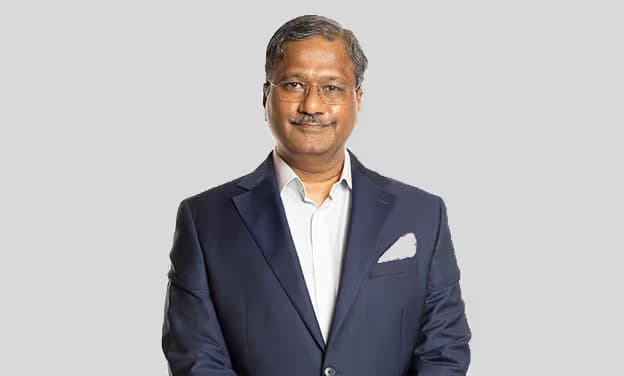
Ramesh Swaminathan, Executive Director, Global CFO and Head of IT and API Plus SBU at Lupin, spoke about the board-approved framework behind the company's recent GLP-1 licensing deals and its Kaveri Therapeutics spin-out, responded directly to Citi's recent downgrade of the stock, and discussed Lupin's sustainability commitments and the future of the finance function.
You've licensed GLP-1, spun out oncology into Kaveri Therapeutics as a minority stake, yet still want outright M&A in ophthalmology, pulmonology and rare neurology. What actually decides which route an opportunity takes, and does this signal a permanent shift away from big acquisitions?
To the contrary, I'd say each of these is charting a growth path for itself. We are, in a general sense, a very acquisitive company, though our capital allocation sits within a framework approved by the board. We're currently debt-free, with some cash on our balance sheet, and we have the ability to borrow at least twice our EBITDA. If you look at our EBITDA today, that's close to Rs 8,000 crore, so we could borrow up to Rs 16,000 crore. Add the Rs 3,000-4,000 crore already on our balance sheet, and we could go up to about Rs 20,000 crore when it comes to acquisitions.
We're focused on specialty. In recent times, we've expanded into ophthalmology — we acquired VISUfarma, and followed that with a further acquisition in the ophthalmology space through Tenpoint as well. History would suggest we're very acquisitive, and more calibrated in recent times about how we go about it.
Clearly, the proposition has to be compelling. When it comes to carve-outs, we've spun our OTC and wellness business into a separate company, carved out a CDMO business, and carved out Kaveri Therapeutics as our oncology spin-out. All of this is done with a purpose — we'd like each of these businesses to grow and spin on its own axis. It gives us the focus that they deserve. A diagnostics business is very different from our core pharmaceuticals business. Digital health is different again. Our wellness and OTC business has its own kind of focus, and CDMO requires a very different kind of attention altogether.
By carving these out into subsidiary companies, we give them the focus they need, and it also opens the door to partnerships — either with a strategic partner or a passive financial partner, as in the case of private equity. The idea is to grow all of these businesses without losing focus on our core business of pharmaceuticals, which will remain the dominant theme at Lupin, while these adjacencies grow at their own pace, depending on the partner and other considerations.
Citi just downgraded Lupin to Sell, cut FY27 EPS estimates 14 per cent, and flagged weak US base-business sales and margin pressure — directly against your 24-25 per cent FY27 EBITDA guidance. Which part of that case do you think is wrong, and what single number should investors watch this year?
We're pretty upfront about the nature of this industry — there's typically a big upside on the launch of certain products, followed by a continuous downside. Take products like Mirabegron and Tolvaptan: they tend to have a sustainable run for a period, and then face a gradual decline depending on the competition that emerges. In the case of Mirabegron, we introduced it about seven-eight quarters ago, and it's had a very good run. We've also settled our cases with Astellas, providing continuity up to September 30. There's still some steam left in it, despite additional competition coming in through the MSN-Amneal combination.
Tolvaptan is a more difficult product, given the REMS framework required to introduce it into the market. It had an extended run simply because there was no competition — that didn't mean there would be no competition forever. It's natural for competition to emerge over time, and that will impact EBITDA. We indicated as much even when we guided for this year's results, so from our perspective, this is in line with what we expected.
What we're really talking about is a secular trend of EBITDA improvement. There's a core EBITDA, and potentially an upside from various product launches — once that launch erodes, there's a reversion to that core EBITDA. If we define our core EBITDA at around 22-23 per cent, there's an upside when individual products are launched, and thereafter it erodes and comes back to that level. But the base itself keeps rising, based on new products we introduce and the efficiency gains we focus on. The idea is to focus on every line of the P&L — improving gross margins, bringing down the cost of conversion, and reducing erosions like idle time. We do this through a number of initiatives — traditional ones, such as alternate route synthesis and alternate vendor development, and increasingly, a number of cases using artificial intelligence. A combination of all of this is what delivers the result.
You wear dual hats — sustainability and finance. Is there a mindset conflict when it comes to cutting budgets? Do you ever cut sustainability budgets, and what does that conflict look like from a CFO's chair?
I see it all as aligned, because finance, in a general sense, is about partnering with the business — none of these activities are incompatible with each other. Finance is about various touch points and the data associated with them, and about partnering with the business on decisions. ESG is very much in line with that, because it has to be aligned with the overall business focus. Whether it's the IT hat I wear, the ESG hat, or the CFO hat, they're pretty much aligned — it's all about aligning on what ends up making this a sustainable business over time.
Generics are currently exempt from the new US pharma tariffs. With the US at 42 per cent of sales, how much of a tariff exemption is already stress-tested into your FY27 numbers?
It really comes down to the kind of products we bring to market. Today, Mirabegron and Tolvaptan together have taken us to a high of USD 1.3 billion, but with that exclusivity wearing off, we will see a dip in that turnover, and newer products will come in. That might not necessarily translate into growth quarter-on-quarter — there will be some volatility between quarters — but I think the secular growth rate, the secular trend line, will be sustained. That's because we have a number of products coming through in fairly complex areas — respiratory products, a number of biosimilars, and complex injectables as well. The specialty business will also start contributing. Across all of this, essentially, we're talking about platforms that can be used to bring our products into various countries.
Water security is one of your two CDP categories, and API manufacturing industry-wide has been flagged for antimicrobial-resistant effluent. What concrete steps have you taken on effluent treatment, and do you expect tighter permitting to hit capacity or capex?
We've been extremely conscious of our ESG responsibilities, and the fact that we're ranked number one across the entire universe of pharmaceutical companies globally reflects that. As you may be aware, we scored 91 on the S&P index, among the top 750 companies in the world. ESG is extremely important to us — whether it's water, carbon capture, or the use of renewable energy, we cover the entire gamut of measures to protect the environment.
We've been particularly successful when it comes to water — we run a number of programmes to manage our water consumption and to replenish water resources in the areas where we operate. On antimicrobial resistance, we've taken a number of measures that look at the entire lifecycle of our products, cradle to grave. We've done assessments across a number of products to ensure that, right through to disposal, the impact on the environment is minimised. We're very conscious of our AMR responsibilities, and a lot of our policies are built around keeping this in check.
Are you committing to a specific net-zero number and timeline?
We've been conscious of this, and we've set targets — 2030 is one target, and it extends to 2050. We have targets for various years along the way.
You've also entered GLP-1 as a B2B licensing supplier rather than building your own branded molecule. Is that a durable earnings driver, or do you think it's a bridge until better-margin specialty assets scale?
Diabetes has been one of our big focus areas — in India, we've had a strong presence in cardiovascular, diabetes and respiratory in a general sense. We've been among the early entrants in the GLP-1 space, and we've made a big success of Semanext, which we introduced to the market — it's done a fairly good job, among the top three molecules in this space. As a company, we're conscious of wanting to maintain this lead, given our equity with doctors in the diabetes space.
We've also in-licensed Bofanglutide from Gan & Lee, which will give us a significant boost, given that it's unique in some ways — a long-acting molecule in this space. It's a fast-evolving space: we now have dual-receptor molecules in the GLP-1/GIP class, and there are triple-receptor molecules coming up as well. As a company, we stay conscious of keeping abreast of technology and the best available products, and we'll do what it takes to license products from other parts of the globe to bring them to the Indian market.
On a separate note, what does the future finance office look like to you?
Finance is a critical function for any organisation, and its touch points, both external and internal, are practically infinite. Connecting all of those dots is extremely important. With artificial intelligence coming in, there's a lot of possibility to take this to a very different level.
Finance, in a general sense, carries out four functions. The first is the custodial function — protecting the resources of the company. We're in a much better position to do that now, with technologies in place to protect the value of the company. The second is releasing value — making processes easier and simpler for adoption and implementation across various functions, and AI has a role to play there too. The third is partnering with the various businesses, which I think is a very important function — we do this through various platforms, capturing data and helping with its interpretation. And the fourth is communicating value — keeping shareholders, investors and other stakeholders informed of what's happening at the company.
Looking ahead, AI will play a very important role. Efficiency will go up considerably with more agentic AI — agents handling a lot of transaction processing as well as data crunching. That makes things far more real-time for the partners we engage with. It also means you'll need fewer people over time. I think there's going to be a lot of reskilling required for finance professionals to deliver on what's expected of them, but equally, the number of people required to do this work will come down. I see a lot of possibility, both on the efficiency front and the effectiveness front.
A lot of CFOs debate whether CFOs make the best CEOs, given that CFOs are essentially shadow CEOs. What do you think?
I think every function has to focus on delivering excellence. That said, CFOs are well placed, given that their touch points — both inside and outside the organisation — are perhaps second only to the CEO's. Having a pulse on the market, and on the bottom line, CFOs are well-equipped to deliver on that front. They make great leaders, and they always have a role to play in strategy. So yes, CFOs are well placed to take on the CEO role too.
How is AI changing what you look for when hiring and upskilling for finance today?
I'd look, firstly, at the ability to adapt to changing circumstances. It's a fast-evolving world, and how someone approaches their individual processes reflects that ability to adapt and adopt new practices. A particular technology might be path-breaking today, but tomorrow it could be something very different. So the ability to imbibe new skills and work with new technologies is, for me, the leading reflection of someone's capability.
This interview was first published in BW CFO World on September 11, 2026.